Welcome to From The Logo, a collection of opinions, analysis, and locker room insights from theScore's lead NBA reporter, Joseph Casciaro.
Is tanking fixable?
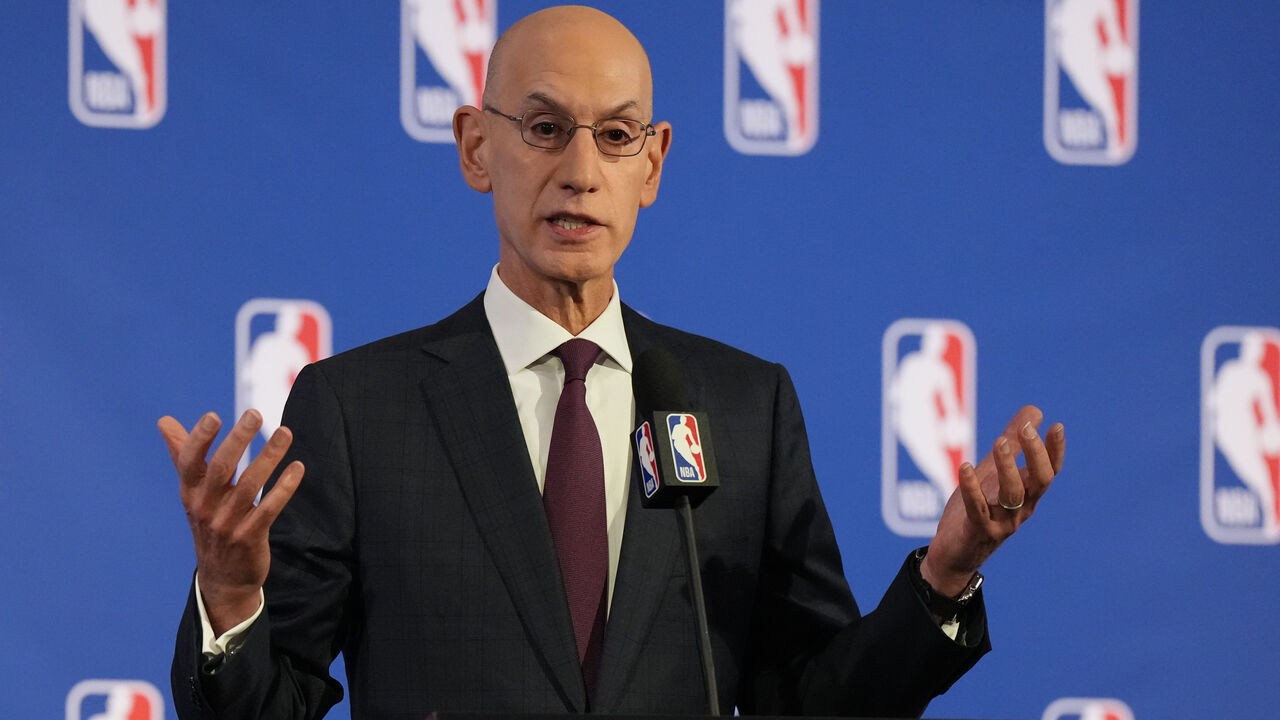
Various factors have conspired to make the league's 2026 tank-off the deepest example of intentional ineptitude we've seen.
For one, there's no escaping tanking in a sport uniquely susceptible to the impact of one superstar. Secondly, this year's draft class boasts at least three players good enough to be No. 1 overall selections in most other drafts, while 2027 and 2028 are projected as historically weak classes. That leaves cellar-dwellers desperate to land a franchise-changing star this summer, with the rewards for futility expected to be worth less in the coming years. Additionally, three of the six worst teams at the moment owe protected picks, retained only if their selections land in the top four (Indiana) or the top eight (Washington and Utah).
Those are among the many reasons roughly one-third of the NBA's 30 teams will try to lose as many games as possible over the season's final two months. That's an obvious problem for the Association, which needs to maintain the competitive integrity of its product while promoting gambling responsibly on it.
Commissioner Adam Silver recently fined the Pacers and Jazz $500,000 and $100,000, respectively, for tanking measures that he said "undermine the foundation of NBA competition." During All-Star Weekend, Silver emphasized that everything is on the table when it comes to figuring out a solution. Meanwhile, team owners have spoken out on social media. Mavericks minority owner Mark Cuban took to X to explain why he thinks the league should embrace tanking, while Suns owner Mat Ishbia - who traded a plethora of picks to build an immediate winner upon buying the Suns - called the practice loser behavior.
When it comes to tanking, everyone has an opinion. And a solution. There are surely arguments to be made for abolishing the draft, separating it from team performance, and randomizing rookie assignments. But any supporters of such radical change would likely cry foul if a juggernaut added another superstar because it was their turn to have a top pick, or if star youngsters maneuvered their way to more desirable markets before they even played a pro game.
The concept of awarding top players to languishing teams (who properly manage their picks) is fine. The league needs to find a way to accept some level of tanking while disincentivizing the most shameful forms of it. Silver's recent punishments are a step in the right direction, but some of the league's reported ideas are not.
Flattening the odds for all lottery teams and including all play-in teams in the lottery would only further incentivize mediocre clubs to drop out of the playoff race. Therein lies one of the dilemmas. Equalizing the odds encourages decent teams to be artificially bad, which is one of the biggest issues fueling this year's crowded field of tankers. However, placing too much weight on being the worst encourages franchises to punt entire seasons before they even begin.
Freezing the odds at the trade deadline or a mysterious point in the season would still lead to tanking. Rewarding teams for wins accumulated after being mathematically eliminated would only encourage hapless squads to race toward elimination to gain a head start.
A couple of good options have reportedly been mixed in. I like the idea of limiting the protections teams can place on picks, specifically eliminating the mid- to late-lottery protections that cause postseason contenders to purposefully sink their playoff odds. Likewise, the league should adopt its reported plan to prevent organizations from drafting in the top four in consecutive years.
However, there's one idea I've long been harping on that still hasn't been broached: The NBA should eliminate the floor for lottery teams by drawing all 14 picks rather than just the top four. The current system ensures teams can't fall more than four spots in the lottery, meaning securing the worst record guarantees a top-five pick. Meanwhile, teams that own protected picks know exactly how bad they need to be to keep said selections.
Would teams be as eager to throw away entire seasons - sacrificing precious revenue in the process - if they knew their pick could fall anywhere in the top-14, no matter how bad they were?
In this scenario, the odds of landing the top pick wouldn't change. The only odds to adjust would be each team's chances of landing fifth through 14th.
There are no catch-all solutions, and the NBA doesn't need to reinvent the wheel, but common-sense tweaks are staring it in the face. Underwhelming draft classes might've meant a two-year break from the worst forms of tanking, anyway. The league has the power to ensure the reprieve lasts much longer. They should use it.
KD's burner scandal, explained
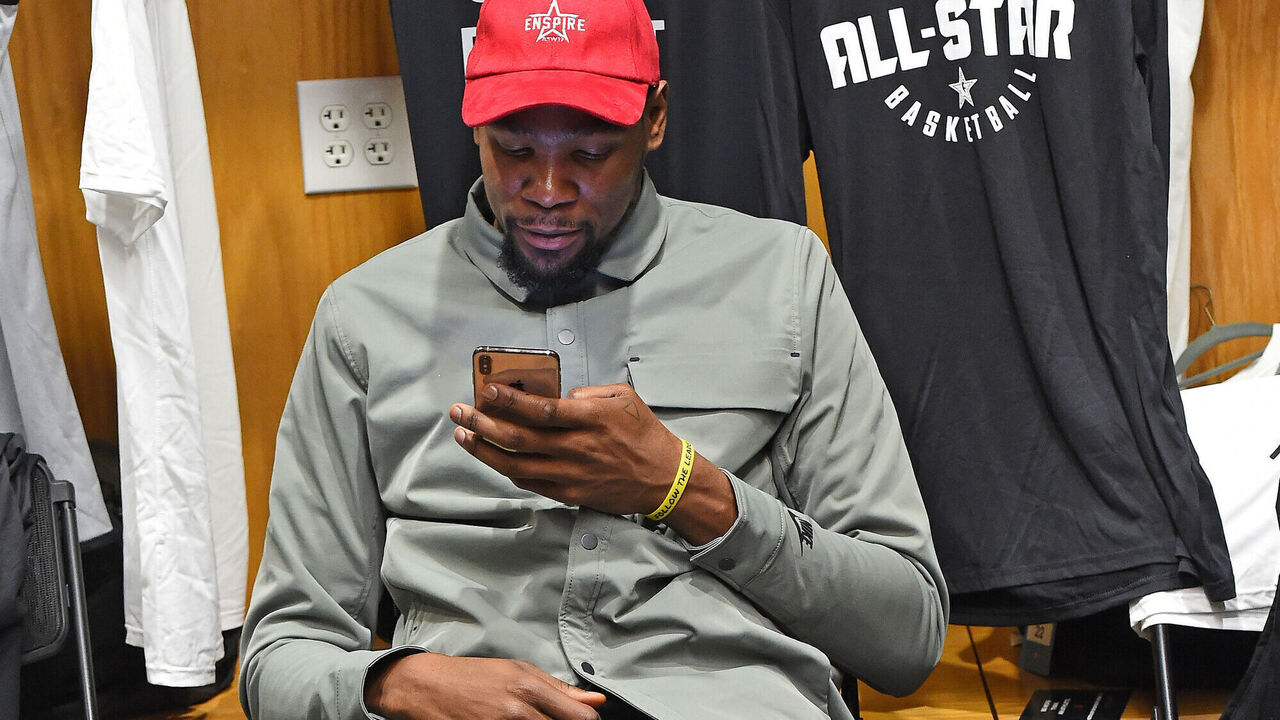
Is Kevin Durant behind a burner account that trashed teammates while using problematic language? The internet seems to think so.
Durant, who inadvertently used his real account rather than a burner to defend himself against critics in 2017, said at the time that criticizing his former team (Thunder) and coach (Billy Donovan) was childish and idiotic, though he admitted to still using burners a couple years later. Fast-forward to the present day, and internet sleuths believe they've uncovered one of those burners.
We'll spare you the trophy-design and drone-related conversations that led to the purported discovery, but the gist of it is this: Screenshots of a group chat that took place on X show a user by the name 'getoffmydickerson' criticizing past and present Durant teammates like Steph Curry, Kyrie Irving, Russell Westbrook, James Harden, Devin Booker, Jabari Smith Jr., and Alperen Sengun. While disparaging those players, the account in question used concerning language. The account used the R-word to describe Rockets big man Smith Jr., while it compared Suns star Booker and former head coach Frank Vogel to brutal dictators (some of whom committed war crimes).
So, how does the evidence point to Durant? When searching the account on X, sleuths discovered that everyone who follows the burner is followed by the real verified Durant. In addition, many replies from those followers hint at events in the real KD’s life, like wishing 'getoffmydickerson' happy birthday on Durant’s birthday and asking him when he’ll be back on the court during a time when the real Durant was sidelined.
The now-private 'getoffmydickerson' uses an image of an owl for its header photo, which looks identical to an image the real Durant shared around the time 'getoffmydickerson' was created in 2021. Perhaps the most damning evidence came from X user '16and0.' The user, who claims to have been in a group chat with Durant's burner while Durant played for the Nets, posted three years ago that the account in question was Durant’s burner. The same user also replied to a 2022 tweet about Kevin Durant by replying to 'getoffmydickerson.'
Is this all just one giant coincidence? Was it a five-year plot to target Durant? Were the messages forged? Or is the real answer the most obvious and damning one?
Durant’s only response thus far has been that he’s not going to get into "Twitter nonsense," which seems like the furthest thing from a denial for a guy who's relished partaking in said nonsense. Barring the emergence of irrefutable evidence that discredits the claims, this story isn't going away. How will Durant’s teammates and peers around the league respond or move on? How will his many sponsors react given some of the alleged language used?
Whatever comes of this social-media scandal, it's about time for the terminally-online superstar to start looking in the mirror instead of his phone.
Inside the locker room
What I'm hearing from players and people around the Association.
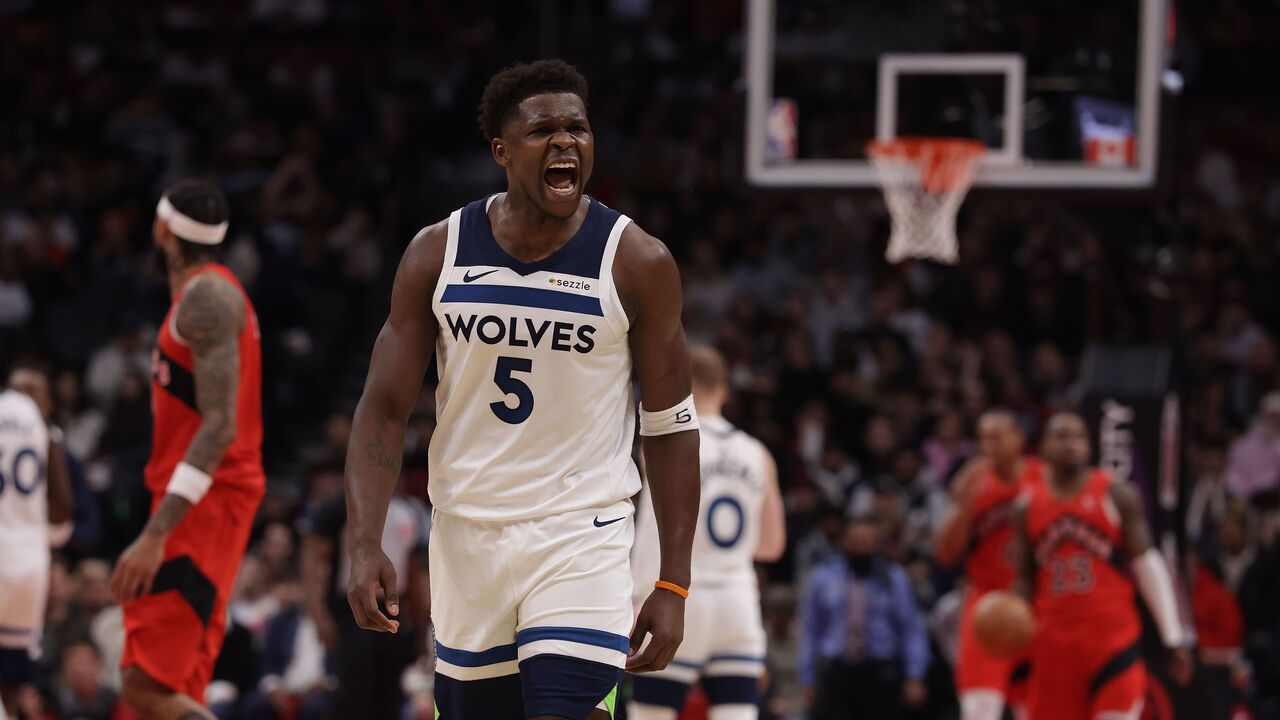
Fresh off an All-Star MVP performance in a surprisingly competitive tournament he helped set the tone for, Anthony Edwards appears poised to add another accolade to his resume: Clutch Player of the Year. Edwards is the betting favorite to win the award, and it's not hard to see why. He ranks second (to reigning MVP Shai Gilgeous-Alexander) in per-game clutch scoring and fourth in total clutch scoring despite ranking 43rd in clutch minutes.
Edwards has been virtually unstoppable in crunch time, converting on an unfathomable 73.8% (31-of-42) of his two-point attempts in the last five minutes of games within five points.
"I think you need to have go-to shots. That's the most important thing," Edwards told theScore about his growth as an NBA closer. "You can have all the dribble moves in the game, but you've got to have a go-to shot. You've got to be able to get to a spot that you're comfortable with. I worked on that all summer, getting to a spot where I'm super comfortable, no matter if it's a heavily contested shot."
While Edwards certainly has go-to spots on the floor, he's scored his 113 clutch points in just about every way (and from every spot) imaginable.
As Edwards sees it, refusing to fear failure and having a short memory help separate true closers from mere mortals. "I missed so many game-winners and shots to take the lead in my first two years. Even this year, I probably missed a whole bunch of them. But those don't count," Edwards laughed. "It's the ones that go in that people remember, so I don't really care about the ones that I miss. And I'm gonna make more than I miss. I promise you that."
The numbers agree.
Player of the week
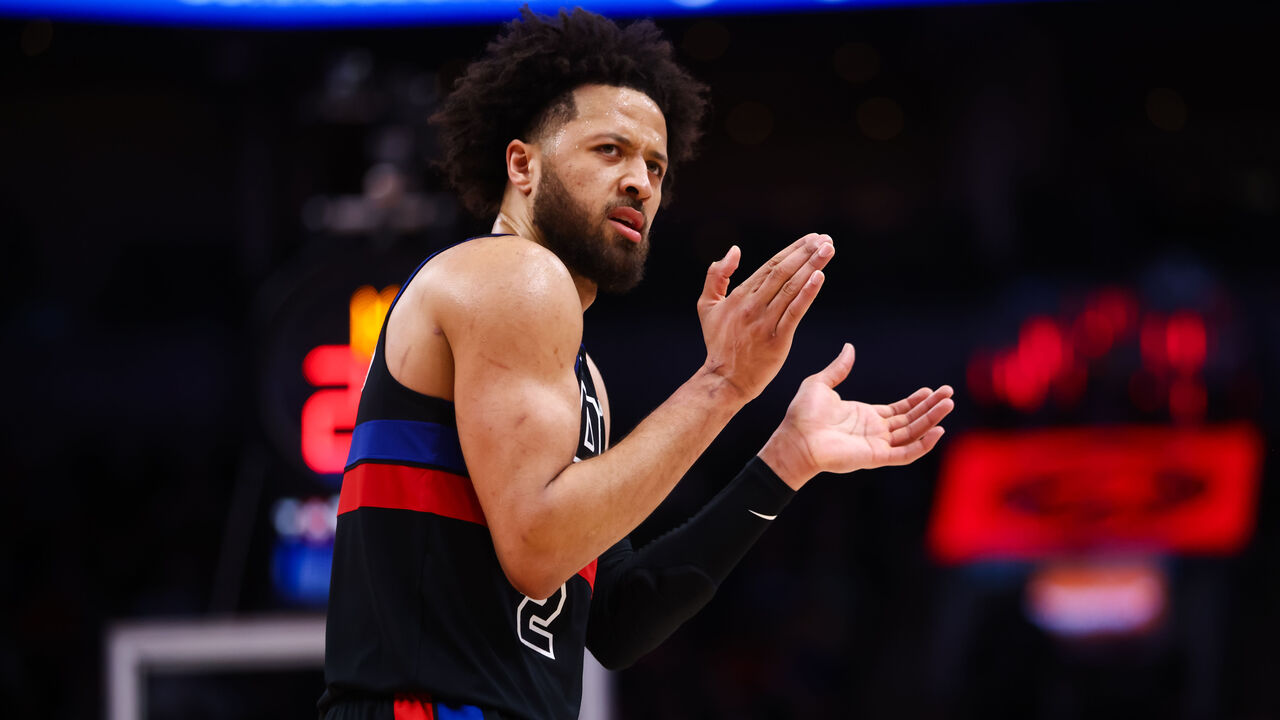
Cade Cunningham: 27.5 PPG, 60.9% TS, 5.9 RPG, 9.6 APG, 2.3 STL + BLK, 7-1 record
I also considered Edwards, Victor Wembanyama, and Kawhi Leonard for this award, which takes a couple of weeks' worth of games into account since our last edition of "From The Logo." Cunningham was an easy choice in the end, with his recent heater helping Detroit leapfrog Oklahoma City for the league's best record.
A career 33.7% 3-point shooter, Cunningham shot 40% from deep over the last two weeks, which can mostly be attributed to his last two games. The rising MVP candidate went 6-of-11 from deep in a victory over the Raptors to enter the All-Star break, then shot 5-of-11 in a 42-point, 13-assist masterpiece against the Knicks in Detroit's first game back. Given Cunningham's size and playmaking abilities, he becomes unguardable when his jumper is falling.
We want to hear from you!
Perhaps you want my opinion or insight on a burning NBA question you've had. Or, let me know if there's something specific you'd like me to ask your favorite player the next time they're in Toronto, where I speak with people from around the league before and after they face the Raptors.
Whatever it is, you can submit your questions three ways.
- Comment on this story in theScore app
- Email me at [email protected]
- Send me a message on X (@JosephCasciaro)