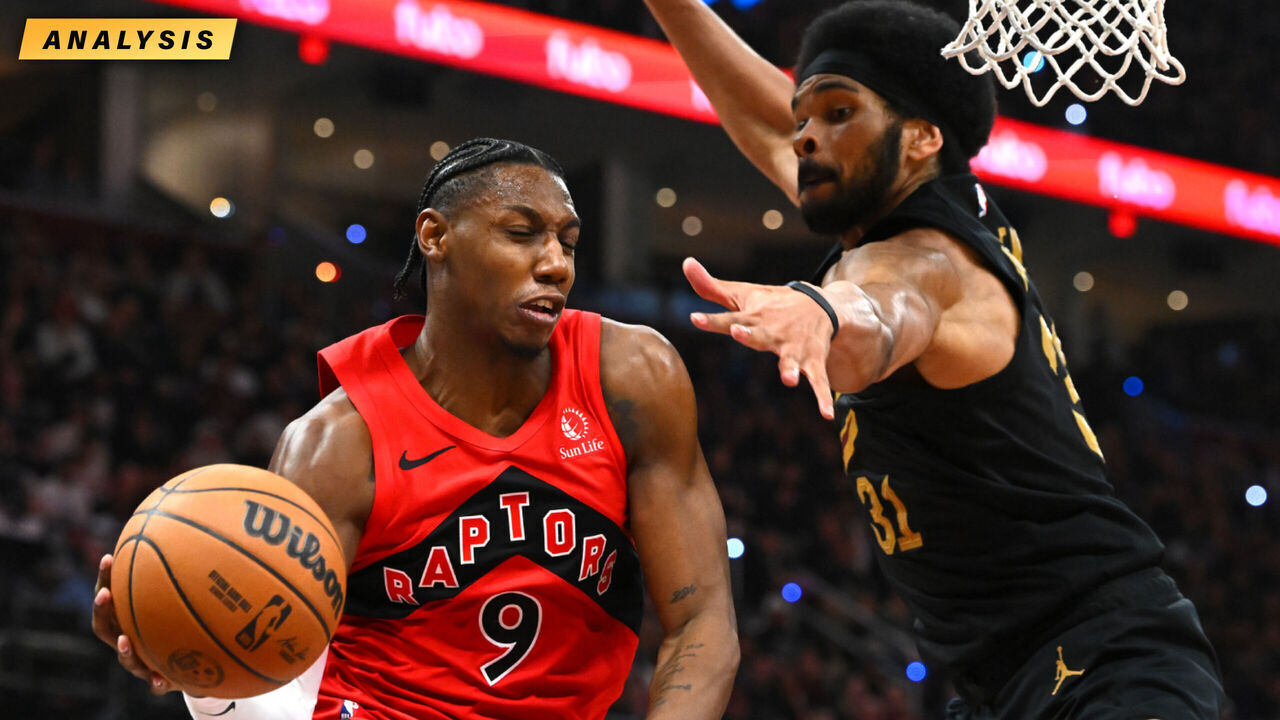
Our basketball writers shared their observations and insights throughout Round 1 of the NBA postseason.
Sunday, May 3
Allen, Cavs role players deliver knockout blow
One of the reasons the heavily-favored Cavaliers couldn't bury the shorthanded Raptors earlier was that Cleveland's giant frontcourt of Evan Mobley and Jarrett Allen wasn't playing as big as its sheer size. That started to change as the series wore on, and Mobley was the Cavs' best player in a Game 6 loss. Allen's biggest and loudest game of the series then came in Sunday's winner-take-all contest, when the center erupted for 22 points, 19 rebounds, three blocks, and two steals.
Allen's energy and force completely changed the game in the third quarter, which the Cavs won by 19 after the Raptors led for most of the first half and the two teams entered the break tied. Allen's play helped Cleveland wrestle control of the paint and kept the relentless Raptors off the glass. He also drew a ton of fouls as the overmatched opposition tried to physically contend with him.
Not to be overlooked, the trio of Max Strus, Sam Merrill, and Jaylon Tyson were game-changers off Cleveland's bench. Their movement helped James Harden and Donovan Mitchell poke holes in Toronto's stout defense. Strus played bigger than his size defensively, Tyson grabbed nine rebounds and dished out four assists in 19 minutes, and Merrill made a game-high three 3-pointers.
Harden's and Mitchell's numbers weren't anything to write home about, but they both had their moments. Thanks to Allen, Strus, Merrill, and Tyson, the star backcourt now has another chance to rewrite its postseason legacy in Round 2. - Joseph Casciaro
Tobias takeover helps Pistons complete 3-1 comeback
Tobias Harris is the most seasoned vet on the Pistons' young roster, with 67 playoff appearances under his belt entering this season. The 33-year-old has been a stable presence through Detroit's ups-and-downs in the opening round, averaging 20.2 points, eight boards, and 1.3 steals entering Sunday's do-or-die showdown. His experience was a major factor in Game 7, as the Pistons closed out a pesky Magic squad to become the 15th team in NBA history to overcome a 3-1 series deficit.
Harris finished with 30 points, nine boards, three steals, two assists, one block, and a plus-22 rating in the series clincher. The 6-foot-8 forward single-handedly sparked the game's turning point. With the contest tied at 45, Detroit went on a 15-4 run over the final 2:47 of the second quarter. Harris scored 11 of his 17 second-quarter points during that span, punishing Orlando in the pick-and-roll, on post-ups, and from beyond the arc. The Pistons' rise to a 60-win contender has been fueled by Cade Cunningham and Jalen Duren, but that would all be for naught without Harris' heroics in the past three elimination games. - Chicco Nacion
Game 7 preview: Can Harden snap hoodoo?
Whether it's justified or not, Cleveland Cavaliers guard James Harden has earned a reputation as a "playoff choker." Sunday's Game 7 against the Toronto Raptors marks Harden's 180th playoff appearance, and while his postseason counting stats are lower than in the regular season, these high-stakes games are obviously more difficult. Defense is played with greater intensity, the games are played at a slower pace, and the opposition is better.
Harden's unwanted notoriety for supposed playoff failures is exemplified in Game 7s. His results across these seven scenarios are a mixed bag. Recency bias doesn't help his case, and nor do his shooting percentages, which are drastically worse than his career field-goal (43.9) and 3-point percentage (36.4).
| YEAR | TEAM | OPP | PTS | REB | AST | FG% | 3P% |
|---|---|---|---|---|---|---|---|
| 2011 | OKC | MEM | 17 | 4 | 3 | 60 | 50 |
| 2015 | HOU | LAC | 31 | 7 | 8 | 35 | 28.6 |
| 2018 | HOU | GSW | 32 | 6 | 6 | 41.4 | 15.4 |
| 2020 | HOU | OKC | 17 | 3 | 9 | 26.7 | 11.1 |
| 2021 | BKN | MIL | 22 | 9 | 9 | 29.4 | 16.7 |
| 2023 | PHI | BOS | 9 | 6 | 7 | 27.3 | 20 |
| 2025 | LAC | DEN | 7 | 5 | 13 | 25 | 25 |
| Totals | 19.3 | 5.7 | 7.9 | 35.5 | 22.4 |
Harden has been on the losing end of three straight Game 7s and is 3-4 for his career.
One massive factor playing in Harden's favor for the do-or-die affair is home-court advantage. The 36-year-old has been far more effective in the three victories at Rocket Arena than in the three defeats in Toronto.
| PTS | REB | AST | TOV | FG% | 3P% | TS% | |
|---|---|---|---|---|---|---|---|
| Home | 24.3 | 5.3 | 6.3 | 5 | 54.2 | 48.2 | 67.5 |
| Road | 17.6 | 3.3 | 7 | 6.3 | 39 | 29.4 | 54.6 |
It shouldn't come as a massive surprise that teams are better at home than on the road when facing the pressure cooker of postseason hoops. If Cavaliers fans are seeking a positive omen amid the apprehensions of Harden's postseason reputation, it's the differences that home cooking and partisan support can provide. - Michael J. Chandler
Game 7 preview: Can Banchero figure out his offense?
No one needs a standout Game 7 like Paolo Banchero.
With Franz Wagner out again because of his strained calf, the Orlando Magic desperately need their former No. 1 pick to erase the memory of Friday's calamity. Not only did Orlando blow a 24-point lead in the second half, but Banchero was central to the collapse. He went 1-of-11 from the floor and was a minus-28 after the break, tied for the Magic's worst mark behind Desmond Bane. Defensively, however, you couldn't ask more from the fourth-year forward; no one contested more than the 22 field goals Banchero did Friday, and only Tristan da Silva (14.3%) held the Pistons to a worse percentage than the 31.8% they shot when Banchero was the closest defender.
But Banchero's biggest contribution Sunday could be simply not shooting Orlando out of the game. Game 6 was already the second time in the series that the Duke product took at least 17 shots and converted under 36% of them without hitting a single three. The only other player to do that in multiple games this postseason is Jamal Murray, whose Denver Nuggets were sent packing by the Minnesota Timberwolves. With a five-year, $239-million base extension set to kick in next season, Banchero's shot failing him again with the season on the line could set up an awkward summer between him and the Magic. - Jonathan Soveta
Saturday, May 2
Maxey saves flailing 76ers
The Celtics turned an 18-point deficit in the third quarter into a one-point game midway through the fourth thanks, in part, to a very spacious zone defense that seemingly nullified Joel Embiid. After running fruitlessly into Neemias Queta on the first shot of the final frame, Embiid's second offensive possession resulted in him being stripped, not just once, but twice by Derrick White, who then capitalized on Embiid being out of position with a quick layup in transition.
Boston realized the 76ers would likely entrust Embiid's usually dependable hands to try to put them away and were ready for it. The frustration appeared to be setting in for the star center when he was arguably lucky to escape with only a tech for an after-the-whistle foul on Jaylen Brown.
With Embiid essentially limited to hovering around the 3-point line, it allowed the Celtics to shadow him with a smaller defender and leave Queta to focus on protecting the rim. Tyrese Maxey, though, was astute enough to burn Queta's deep screen coverage multiple times in Game 2, and he punished the Portuguese center late again Saturday, using high pick-and-rolls on back-to-back possessions with Kelly Oubre Jr. to isolate Queta near the 3-point line before easily blowing past him.
Those two gutsy drives were all the separation the 76ers needed, especially considering Boston could only muster one made field goal inside the final five minutes. "I just wanted the ball," Maxey said of his play down the stretch. He certainly did, and Philadelphia became just the 14th team in NBA history to overcome a 3-1 series deficit because of it. - Jonathan Soveta
Friday, May 1
LeBron shuts door on Rockets' season
It wasn't how the Lakers scripted things after jumping out to a 3-0 series lead, but they'll be delighted to have gotten the job done, especially without Luka Doncic for the entire series. With the Rockets gaining momentum following back-to-back wins, LeBron James came out with a sense of urgency in Game 6 and delivered a vintage closeout performance. The 41-year-old finished off the opening round with 28 points, eight assists, seven boards, and a game-high plus-26 rating in 37 minutes. It was his 157th career playoff game with at least 25-5-5.
James had his fingerprints all over Los Angeles' Game 6 win. He put the Lakers on the board with a driving layup on the team's first possession and got his teammates going with three dimes in the first quarter, including a one-handed dart to jumpstart Rui Hachimura's 21-point night. James looked for his shot more in the second quarter, scoring 14 points on 5-of-8 shooting. The four-time Finals MVP had his way with anyone Houston threw at him. He spun around defenders in the paint, exploded to the rim in the open court, drained turnaround jumpers in the post, and nailed step-back threes. James' flurry of baskets helped put the Lakers up 18 at halftime, and the Rockets never threatened them the rest of the way. - Chicco Nacion
How shorthanded Raps scored enough to survive
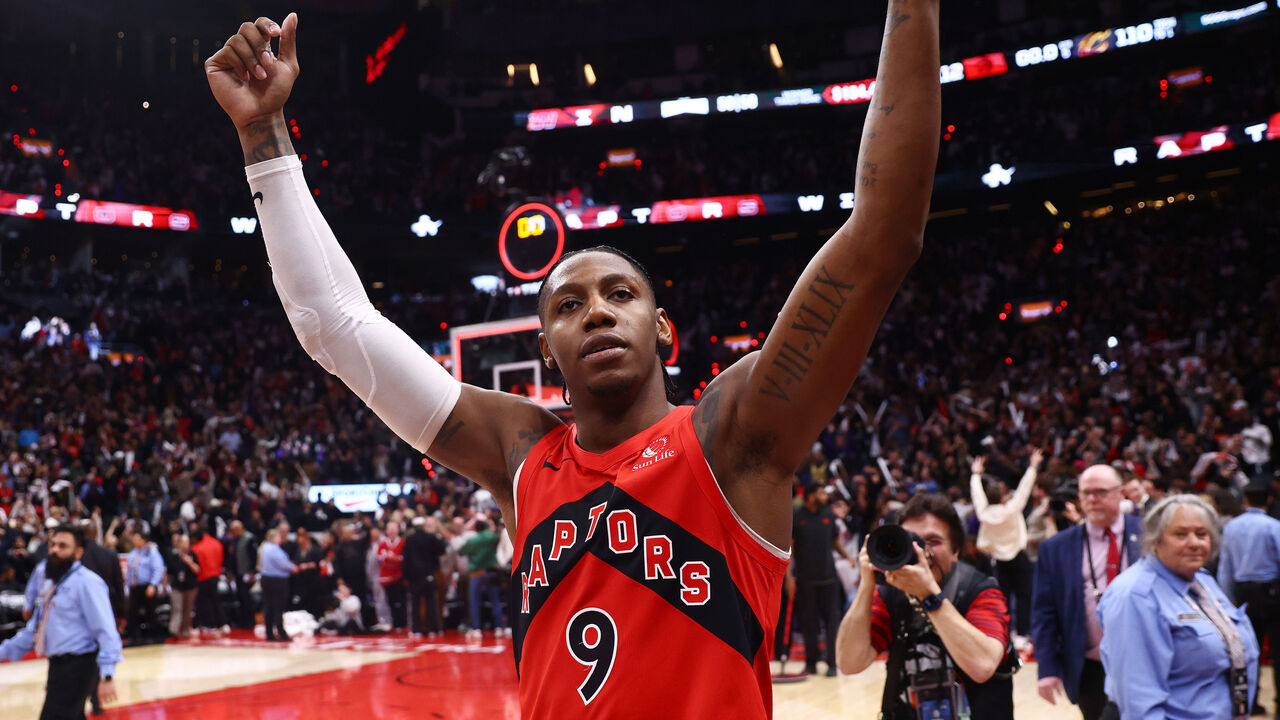
RJ Barrett's miraculous overtime three-pointer will be the indelible image of Toronto's Game 6 win over Cleveland, but it was the way that game-winning shot was created that told the story of how the Raptors lived to fight another day.
The Raptors have played the entire series without starting point guard Immanuel Quickley and were forced to play Game 6 without leading scorer Brandon Ingram, who if nothing else in this series, demanded Cleveland's defensive attention. With Ingram joining Quickley on the sidelines, the Cavs focused their entire gameplan on Scottie Barnes. Cleveland threw extra bodies at Barnes and walled off the paint, hoping he would settle for long jumpers, force contested shots in a crowd of giants like Evan Mobley and Jarrett Allen, or spray the ball out to Toronto's role players. Essentially, the Cavs dared Barnes to beat them with his passing and dared players like Barrett and Ja'Kobe Walter to beat them with their shooting. And that's exactly what happened.
Rather than force anything that wasn't there, Barnes leveraged the attention he was commanding and the power of his brilliant playmaking to open up looks for Barrett, Walter, and the rest of his supporting cast. Credit those players for staying aggressive, attacking the space forged by Barnes, and letting it fly on the catch. Toronto's crunch-time offense was ghastly, but with their season on the line, head coach Darko Rajakovic opted not to call a timeout, trusting that Barnes would make the right play. Barnes then drew a double-team, kicked it out to Barrett, and watched like 20,000 other fans as Barrett's shot hit the back-rim, popped straight up, and fell through.
Barnes' 25-point, 14-assist performance accounted for roughly 53% of Toronto's Game 6 output (59 of 112 points). Barrett started his post-game press conference by praising Barnes' playmaking and trust in him. Walter, who matched Barrett's 24 points, echoed that sentiment, saying the Raptors knew they had to make the most of Barnes' playmaking with all eyes on the star forward.
"You can't stop the offense and worry about force-feeding Scottie all the time," Walter told theScore. "He does a great job of getting to the paint for us and he always makes the right decision. And then coach always says, 'If it's an open shot, don't second-guess yourself.' No matter who you are, just shoot the shot."
The shorthanded Raptors didn't need to score outrageously to survive. Their tremendous defense ensured they just needed to score enough. Barnes' vision, his teammates' confidence, and one unbelievable bounce ensured they did. Now they're playing with house money in Game 7. - Joseph Casciaro
Pistons' defense fuels epic Magic meltdown
The Pistons kept their season alive in historic fashion, overcoming a 24-point deficit to force a Game 7 back home in Detroit. It was the largest road comeback in a playoff elimination game in the play-by-play era. J.B. Bickerstaff's squad has prided itself all season on its defensive intensity, and that shone through from the moment they took the floor in the second half.
Ausar Thompson had a block and steal on the same possession early in the third quarter, and that set the tone for the remainder of Game 6. Cade Cunningham had one of his game-high four steals on the very next possession, and the rest of the Pistons fell in line with their leaders. Paul Reed stepped up with Jalen Duren briefly sidelined, recording three blocks in seven second-half minutes. Thompson continued to cause havoc down the stretch as well, adding three more swats, including an emphatic denial on Wendell Carter Jr. with 3:53 left to effectively end the Magic's hopes.
Detroit tallied five steals, eight blocks, and scored nine points off seven turnovers in the second half. They limited Orlando to 19 points on 4-of-37 shooting over the final 24 minutes, breaking the previous NBA playoff record for the fewest points in a half, according to ESPN's Jorge Sedano. The Magic missed 23 consecutive field goals to set a new league playoff mark in the play-by-play era, per ESPN Research. Only two other teams have ever misfired on 20-plus straight shots in a postseason contest. Paolo Banchero went 4-of-20 from the field - including 0-of-9 from deep - just two nights after dropping a playoff career-high 45 points. - Chicco Nacion
Morey's vision finally coming to fruition
Daryl Morey's vision has finally come to fruition in the Sixers' first-round series against Boston. Philadelphia's acquisition of Paul George in 2024 was viewed as the signing of the summer, designed to lift the team out of playoff purgatory. While injuries, suspensions, and a whole lot of losing have defined the two seasons since, the 76ers may have found a championship recipe by plugging George into a limited role alongside Joel Embiid and Tyrese Maxey.
George has been efficient with his relatively limited touches as the offense primarily runs through Embiid and Maxey. The Sixers are scoring the most pick-and-roll points per game in the playoffs, while Boston is struggling to stop ball screens featuring Philly's duo.
Embiid, Maxey, and George have combined to score 67% of the 76ers' points over the last three contests, and that's a lot closer to what the front office and fans expected two summers ago. Then again, Philly's comeback could be all for naught if it doesn't win Game 7, which would leave questions lingering into the offseason about why the team was a 7-seed in the first place. - Sam Oshtry
Thursday, April 30
McDaniels walks the talk
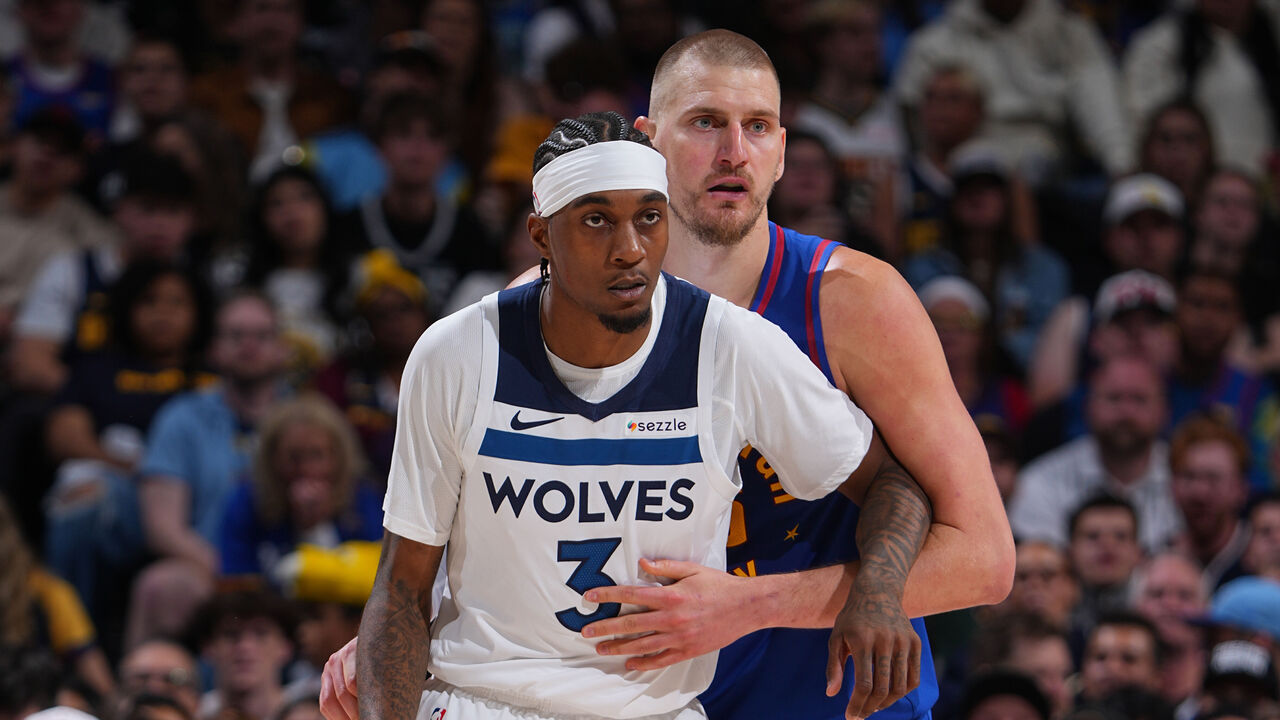
Jaden McDaniels ruffled some feathers when he called several Nuggets players "bad defenders" following the T-Wolves' Game 2 win. The 6-foot-9 forward added more fuel to the fire when he drew the ire of Nikola Jokic for making a layup instead of dribbling out the clock in Game 4. Not everyone may have agreed with McDaniels' decision to poke the bear, but you have to give him full credit for not backing down.
McDaniels was needed more than ever with Anthony Edwards and Donte DiVincenzo both injured. The Washington product didn't have his best performances in Games 4 or 5, but he came through when it mattered most in the series clincher with Minnesota down two more players. McDaniels registered a career-high 32 points, 10 rebounds, three assists, two steals, one block, and a game-high plus-16 rating in 44 minutes. He had 12 points in the final frame to help stave off Denver's late surge.
For as good as McDaniels was offensively, his lockdown defense on Jamal Murray may have been most important. The Nuggets star was held to a series-low 12 points on 4-of-17 shooting in Game 6, and made only 35.7% of his field goals during the opening round - nearly 13% below his regular-season mark. Denver may have been the more talented team on paper, but the T-Wolves had Jaden McDaniels. - Chicco Nacion
Knicks finish off Hawks in emphatic fashion
If you just happened to stumble upon the Knicks-Hawks scoreline and weren't watching the game, nobody would blame you for thinking it was some sort of glitch. The dominance New York displayed Thursday evening shattered multiple NBA records. The Knicks came out of the gates looking for the kill and had Game 6 wrapped up before the Celtics and 76ers took the court an hour later.
New York led 40-15 after the first quarter and somehow stretched that advantage to as many as 61 points, which was the biggest edge at any point of a postseason contest in the play-by-play era, according to Josh Dubow of The Associated Press. The Knicks' 47-point halftime lead was the largest in NBA playoff history, surpassing the previous mark of 41. New York's 12 steals through two quarters equaled the amount of field goals Atlanta made.
The Knicks' lopsided Game 6 win pushed their point differential to plus-105, which is the largest in postseason history for a six-game series, per Stathead. - Chicco Nacion
PG turns back clock
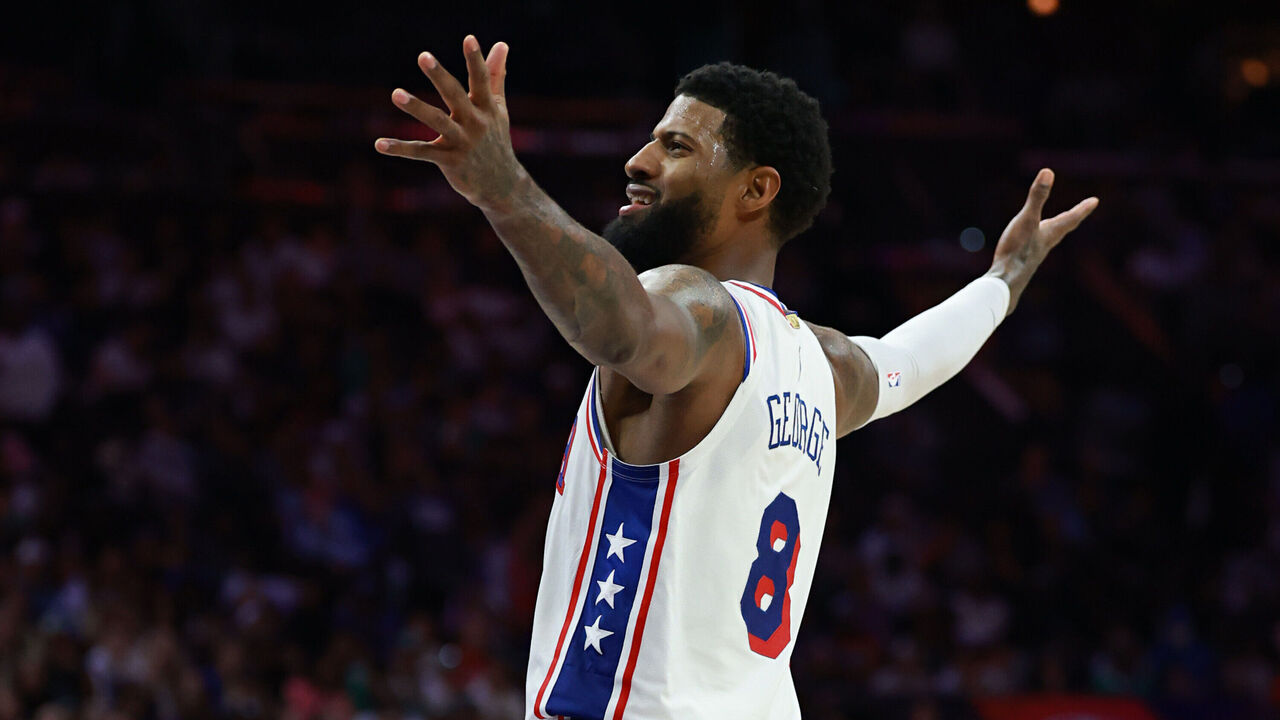
At the peak of his powers, Paul George was one of the top two-way players in the game. His shot-creation, 3-point stroke, playmaking, and strong perimeter defense made him such a difficult player to gameplan against. Injuries have slowed George down over the past several seasons. But every now and then, he's capable of turning a game on its head.
George had an all-around performance with the 76ers' season on the line, tallying 23 points, four boards, three assists, two steals, one block, and a plus-11 rating in 40 minutes. The 35-year-old was knocking down pull-up jumpers, making backdoor cuts, side-stepping into threes, and even dropping behind-the-back dimes in transition. He scored 10 points in a decisive third quarter that saw Philadelphia stretch its lead to 19.
George held Jaylen Brown in check for the second consecutive contest, using his length, strength, and smothering on-ball pressure to frustrate the Celtics star. Brown never found his groove in Game 6 and committed a game-high five turnovers. It was a very similar story two nights ago in Boston as Brown went 2-of-10 from the field with George serving as his primary defender. If the 76ers complete the 3-1 series comeback, George will likely be a huge factor in Game 7. - Chicco Nacion.
Celtics need more from White
Somewhat lost in the doom and gloom of Boston's ice-cold fourth-quarter capitulation in the Game 5 loss to Philadelphia is how bad the usually reliable Derrick White has been. It's easy to dwell on the Celtics missing 14 straight baskets in the final seven minutes Tuesday - the most in a playoff contest since 2005 - but we're here to shine a light on White.
He's recording 8.2 points in this series on 30% shooting, nearly half his scoring average (18.5) from the regular season. The 31-year-old is also 7-of-33 (21%) from deep. In Game 5, White went 2-of-8 from the field and 0-of-4 from behind the arc, with a lot of those being open looks. He's also averaging two fewer assists per contest through five playoff games compared to the regular season and has seen his plus-minus drop from plus-7.8 to plus-1.4.
Payton Pritchard's postseason prowess might offset some of White's offensive failures, but he's nowhere near the defender that his struggling teammate is. Joe Mazzulla doesn't have another player that can do what White does, and at the moment, what he's doing isn't good enough. - Michael J. Chandler
Wednesday, April 29
Rockets suddenly have life
There's still a long way to go before Houston becomes the first NBA team to overcome an 0-3 series deficit, but the Rockets are halfway there and will have another chance to extend their season Friday at home. Ime Udoka's squad has gotten themselves back into the matchup with their 3-point shooting and defense. Houston has drained at least 12 triples in each of the past two contests, with Jabari Smith Jr. and Reed Sheppard leading the way with six makes apiece. The Rockets have outscored the Lakers by 42 points from downtown across Games 4 and 5. Los Angeles started 3-of-5 from deep in Game 5 before missing 18 of its next 22 attempts.
Houston continued to capitalize on the Lakers' miscues Wednesday evening, tallying 18 points off 15 turnovers. Sheppard had his second straight three-steal performance and made amends for his costly turnover in Game 3 by stripping LeBron James of the ball and taking it back the other way for a flush to put the Rockets up by seven with 2:20 to go. Los Angeles is still in the driver's seat, but Houston's got momentum on its side. - Chicco Nacion
Schroder saves underwhelming Cavs
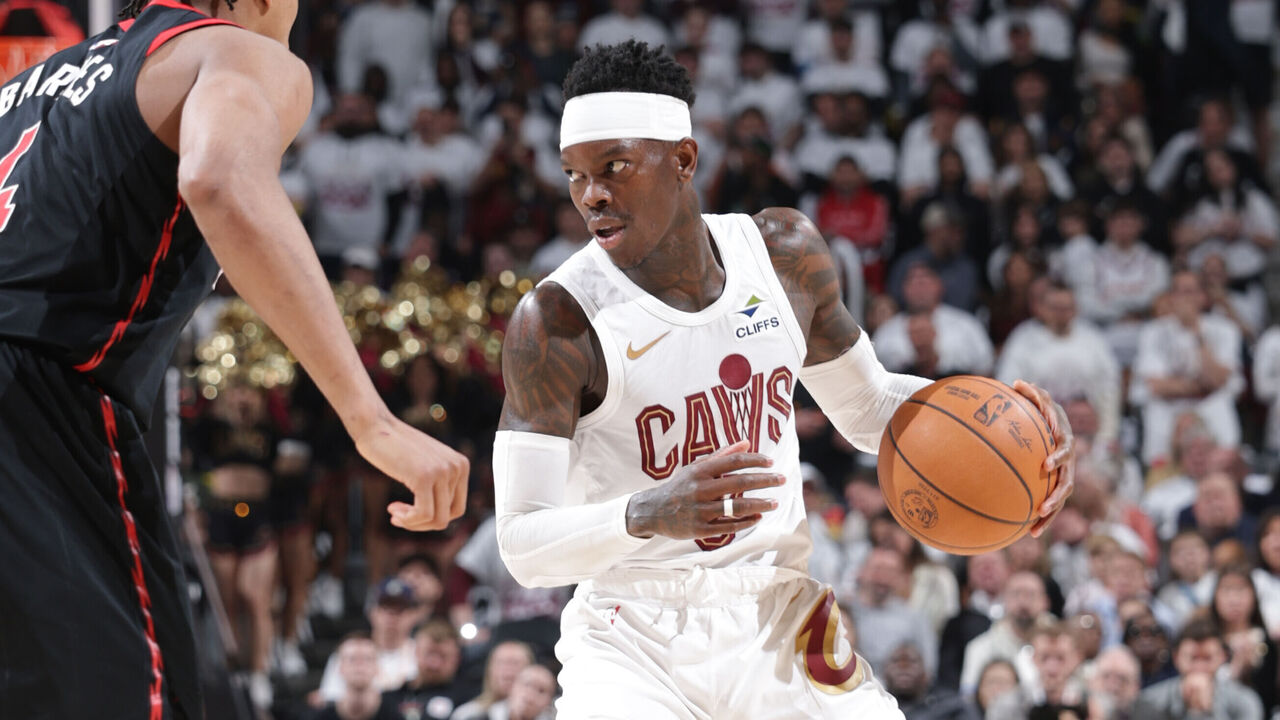
James Harden paced the Cavs early and Evan Mobley's most complete game of the series couldn't have come at a better time, but Cleveland owes its tiebreaking Game 5 victory to Dennis Schroder. I had been critical of head coach Kenny Atkinson's commitment to Schroder in the matchup against Toronto, but the veteran reserve swung the game and the series in the fourth quarter of Monday's contest.
The Raptors deserve a ton of credit for controlling Game 5 as long as they did and for being within an arm's length late. Toronto has been without starting point guard Immanuel Quickley all series. Leading scorer Brandon Ingram has played the worst basketball of his career and left in the second quarter (due to heel inflammation). Meanwhile, franchise star Scottie Barnes - who's been the best player in the series - was clearly hobbled in the second half. That the game played out the way it did is a testament to the young Raptors' toughness and an indictment of the big-budget Cavs. But what Toronto's elite defense couldn't do was stop Schroder.
Over a fourth-quarter stretch of 5:55, Schroder - who averaged 8.2 points for Cleveland during the regular season - scored 11 of the Cavs' 18 points and singlehandedly outscored Toronto, 11-10. It's no wonder Schroder played the final 16 straight minutes of Game 5, during which time he accounted for more than half of Cleveland's offense (19 of 37 points) between his scoring and assists. He consistently beat his man to the rim, blowing by each of a limping Barnes, a good defender in Ja'Kobe Walter, and RJ Barrett. When Walter ducked under a screen against the career 34% shooter, Schroder made him pay with a dagger three.
It was a massive boost for the uninspiring Cavs, and a deflating blow for the undermanned Raptors, who struggled to create decent looks on the other end. - Joseph Casciaro
Cade outduels Paolo to keep Pistons alive
Cade Cunningham put Detroit on his back with the Pistons facing an embarrassing exit at the hands of the 8-seed Magic. The two-time All-Star put together the finest playoff performance of his young career, tallying a postseason franchise-record 45 points on 13-of-23 shooting to go along with five assists, four boards, and one steal in 44 minutes. His 27 points at the midway point was the highest scoring postseason half in franchise history during the play-by-play era.
Cunningham had it going at all three levels. The 6-foot-6 guard was draining pull-up threes whenever the Magic went under screens. He repeatedly drew fouls with his brute strength, and proceeded to make all 14 of his attempts from the charity stripe. Cunningham was clinical around the free-throw line and elbow, too, consistently creating space for himself to knock down step-backs, including a decisive basket to put Detroit up two possessions with 31 seconds left.
The Pistons needed every bit of production from Cunningham to overcome a spectacular effort from another No. 1 overall pick on the opposite side. Paolo Banchero nearly willed Orlando to a Game 5 road win with his own 45-point outburst. The Magic forward also set a new playoff career-high in points and was just one shy of the team's single-game record shared by Dwight Howard and Tracy McGrady. Cunningham and Banchero are the first players to score at least 45 points in the same playoff game since Donovan Mitchell and Jamal Murray accomplished the feat in 2020, according to Tim Reynolds of The Associated Press. - Chicco Nacion
Celtics living and dying by 3-ball
The Celtics have ranked in the top five in 3-point attempts every season since Joe Mazzulla became the head coach in 2022. They unapologetically hunt threes. It's a risky but usually successful formula for a group headlined by two dominant downhill drivers - Jayson Tatum and Jaylen Brown - with shooters surrounding them. But as the old basketball adage goes, live by the three, die by the three.
That's never been truer than in Boston's first-round series against the Sixers. In the Celtics' three wins, they've drilled 41.6% (60-for-144) of their triples. In their two losses, they've connected on 27.2% (24-for-88) of their deep shots. Boston leads all postseason teams in threes attempted, averaging 46.6 per game (the Cavs average the second most with 39.3), and it's the only playoff squad with more than 50% of its shots coming from beyond the arc.
But when the Celtics shoot 28.2% from three on just 39 attempts, as they did in their Game 5 loss, they don't stand a chance. While Boston missed open shots it typically makes, the Sixers' defensive plan contributed to the rough shooting night. The Celtics averaged the most wide-open threes per game (when the closest defender is at least six feet from the shooter) through the first four contests of the playoffs. In Game 5, Philadelphia didn't overhelp on drives and coerced Boston into playing one-on-one, limiting the team's clean attempts from deep while forcing contested shots. The Celtics' 3-point identity depends on earning quality looks. They shoot a lot of threes because they earn open threes. If Boston can't create premium 3-pointers, it'll find itself in trouble in this series and beyond. - Sam Oshtry
Tuesday, April 28
Wemby, Spurs on to West semis
Things looked a little dicey for San Antonio when the team flew to Portland tied at one with Victor Wembanyama in concussion protocol. A week later, the Spurs are off to the second round after three straight wins over the Trail Blazers.
San Antonio showed us a little bit of everything in its triumphant five-game series. Wembanyama was a man among boys in the three full games he started and finished, averaging 26.3 points on 74% true shooting to go with 10.3 rebounds and five blocks across Games 1, 4, and 5. Forward Julian Champagnie continues to shoot the lights out. The team's three starting guards - Stephon Castle, De'Aaron Fox, and Devin Vassell - showed why they're so tough to contain, with their combination of rim-pressure, shot-creation, and shooting too much for opposing defenses to contend with.
The team's most improved guard, rookie reserve Dylan Harper, might've been the best of the bunch against Portland, leading an impressing second unit that includes Sixth Man of the Year Keldon Johnson, veteran forward Harrison Barnes, and underrated center Luke Kornet. This is a sound two-way team playing wise beyond its years, coming off a series in which it outscored the Blazers by an average of 12.4 points per game. Not bad for the young group's first playoff run together.
Wemby and Co. will wait for a winner to emerge between the severely depleted Timberwolves and Nikola Jokic's inconsistent Nuggets. Other than an obvious edge in experience, there aren't many basketball reasons to believe either squad can take San Antonio down. Just as they did throughout a sparkling 62-win regular season, the Spurs still look like the team most capable of dethroning the Thunder. - Joseph Casciaro
KAT stands tall for Knicks
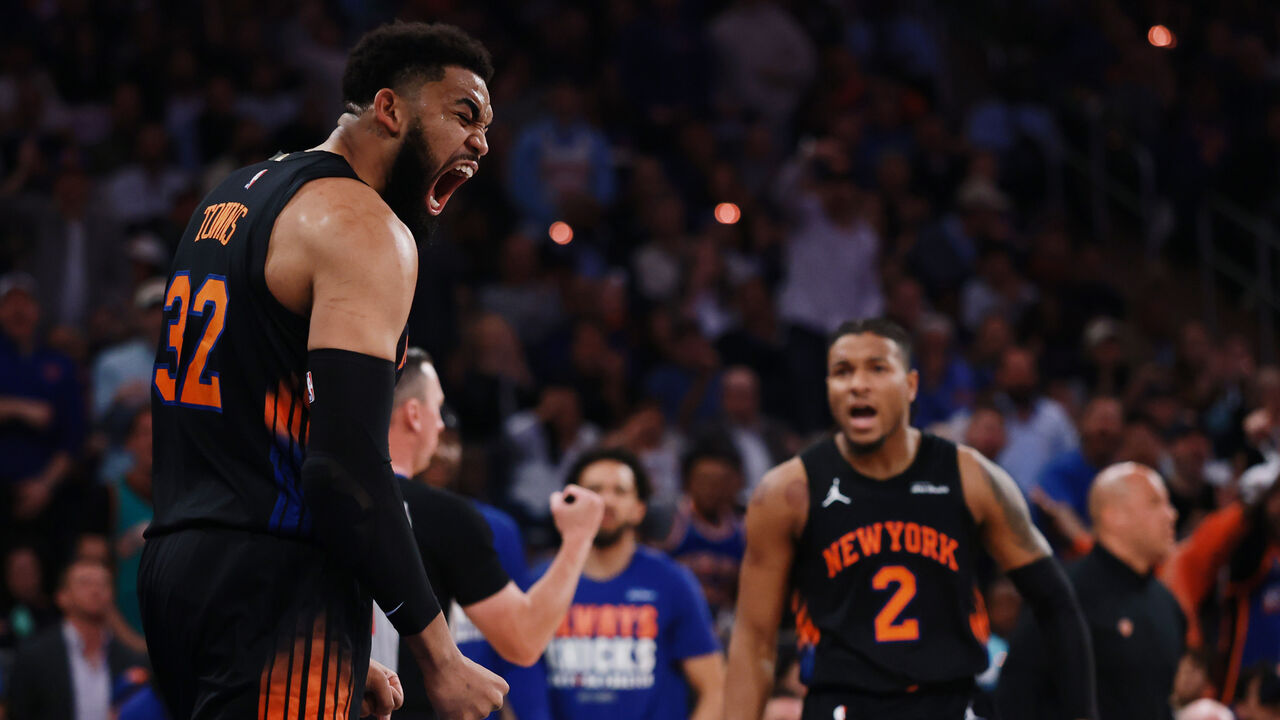
Jalen Brunson finally shook free for a big night (39 points on 73.5% true shooting) in New York's Game 5 win over Atlanta, but the most encouraging development for the Knicks has been the play of Karl-Anthony Towns. The enigmatic big man has a complicated playoff history, but he's been terrific against the Hawks, emerging as the series' best player thus far. Towns had his fingerprints all over a series-tilting Game 5 victory despite limited usage.
KAT was efficient (16 points on 10 shooting possessions). He moved his feet defensively and used his size in the paint, finishing with a game-high four stocks. He dominated the defensive glass to close possessions for the Knicks' outstanding defense, showing why he leads all Eastern Conference starters in postseason rebound rate. He also continued to excel as a playmaker, dropping some nifty dimes en route to six assists, a figure that doesn't capture the points he created with his screening, both on the ball and off.
The 2026 Knicks aren't the first team to say this at some point during a playoff run, but if New York can keep getting this version of Towns, their Finals odds feel a lot more promising. - Joseph Casciaro
Embiid's 2nd-half adjustments extend 76ers' season
Things didn't start off so well for Joel Embiid and the 76ers in Game 5. The All-Star center settled for way too many shots from the perimeter in the first half, going 5-of-13 from the field and 0-of-5 from downtown. But credit Embiid for making the proper adjustments coming out of the locker room. The former MVP bounced back for 18 points, three assists, and two boards in the second half as he repeatedly imposed his will on the Celtics' frontcourt.
Whether it was Neemias Queta or Nikola Vucevic, neither had an answer for Embiid's bully ball. The 7-footer faced very little resistance as he backed down toward the basket. Once Embiid saw the ball go through the hoop a few times, he had the confidence to hit turnaround jumpers and pull-ups from the free-throw line. The big man's dominance in the paint also attracted double teams and allowed him to hit teammates for clean looks from beyond the arc.
Philadelphia hit four more threes than Boston in Game 5. The winner of the 3-point battle has prevailed in each contest of this series. - Chicco Nacion
Past analysis
Check out all our archived items from previous days here.
US: Must be 21+. Gambling problem? Call 1-800-GAMBLER; Hope is here. Call (800)-327-5050 or visit gamblinghelplinema.org for 24/7 support (MA); Call 877-8-HOPENY or text HOPENY (467369) (NY).
ON: Please play responsibly. 19+. ON only. If you or someone you know has a gambling problem, call ConnexOntario 24/7 at 1-866-531-2600. Text us at 247247 or chat with us at www.connexontario.ca.