DFS: An Argument Against Mid-Tier Running Backs
The running back position is generally perceived as the safest and the most predictable of the daily fantasy roster spots. While it's nearly impossible to know which of several pass-catching options a quarterback will favor in a given week, it's relatively easy to know who will handle the bulk of the workload on the ground for any team with a favorable defensive matchup.
Here's a look at the amount of weekly top-five performances turned in by running backs in 2014, courtesy of thehuddle.com:
6: Le'Veon Bell
5: Marshawn Lynch, Eddie Lacy, Matt Forte
4: Jamaal Charles, Lamar Miller
3: Mark Ingram, Knile Davis, Arian Foster, Jeremy Hill
2: Justin Forsett, Giovani Bernard, Frank Gore, Matt Asiata, Ahmad Bradshaw
1: 18 others
Thirty-five different running backs combined to account for the 85 top-five fantasy performances at the position in 2014.
Of the 17 players with multiple top-five performances, one is unemployed (Bradshaw) and three are backups (Bernard, Davis and Asiata). The other 13 are in the top-21 priced running backs heading into Week 1 of the 2015 season.

There are the top-tier running backs, and then there's everyone else. The top-tier guys can be expected to finish in-and-around the top-five more often than not, and they should be targeted when facing their most ideal matchups.
The issue with the second running back spot is that mid-tier backs are about as likely as a replacement starter to post a top-five performance. Nine of the 18 backs with a single performance weren't full-time starters in 2014, and five others can be regarded as strictly backups.
Rashad Jennings, Alfred Morris, Andre Ellington and LeSean McCoy were the only four running backs to post a single top-five week that can be regarded as true starters.
Finding Value
For GPP tournaments primarily, one of the first places owners should look for value is the pass-catching running backs. In 2014, Bradshaw turned in his multiple top-five performances while catching 38 passes for 300 yards and six touchdowns, despite only rushing for 425 yards and two touchdowns in 10 games with the Indianapolis Colts.

Philadelphia Eagles RB Darren Sproles makes for a strong target in Week 1 despite the crowded backfield in Philly. Sproles' opponent will be an Atlanta Falcons pass defense that ranked No. 29 against running backs in 2014, and he'll cost just 6.6% of the cap.
Pass-catching backs are often greatly underpriced, as their variance could see them produce a big week, or be left with empty hands and next to no rushing yards.
Kansas City Chiefs RB Knile Davis finished in the top-five at his position in Weeks 2, 3 and 15.

In Week 2, Davis took over when RB Jamaal Charles was forced from the game, and Davis then started Week 3 in Charles' place. In Week 15, Davis scored on a 70-yard reception and on one of his nine carries, despite averaging 1.2 yards per attempt in that game.
Running backs making a spot start or their first start of the season should be the primary picks of owners seeking value. Teams are unlikely to drastically change a run-heavy gameplan in the event of their regular starter being inactive.
Similarly, teams will want to get a good look when debuting a new player in the backfield, and are likely to give him plenty of work and opportunities.
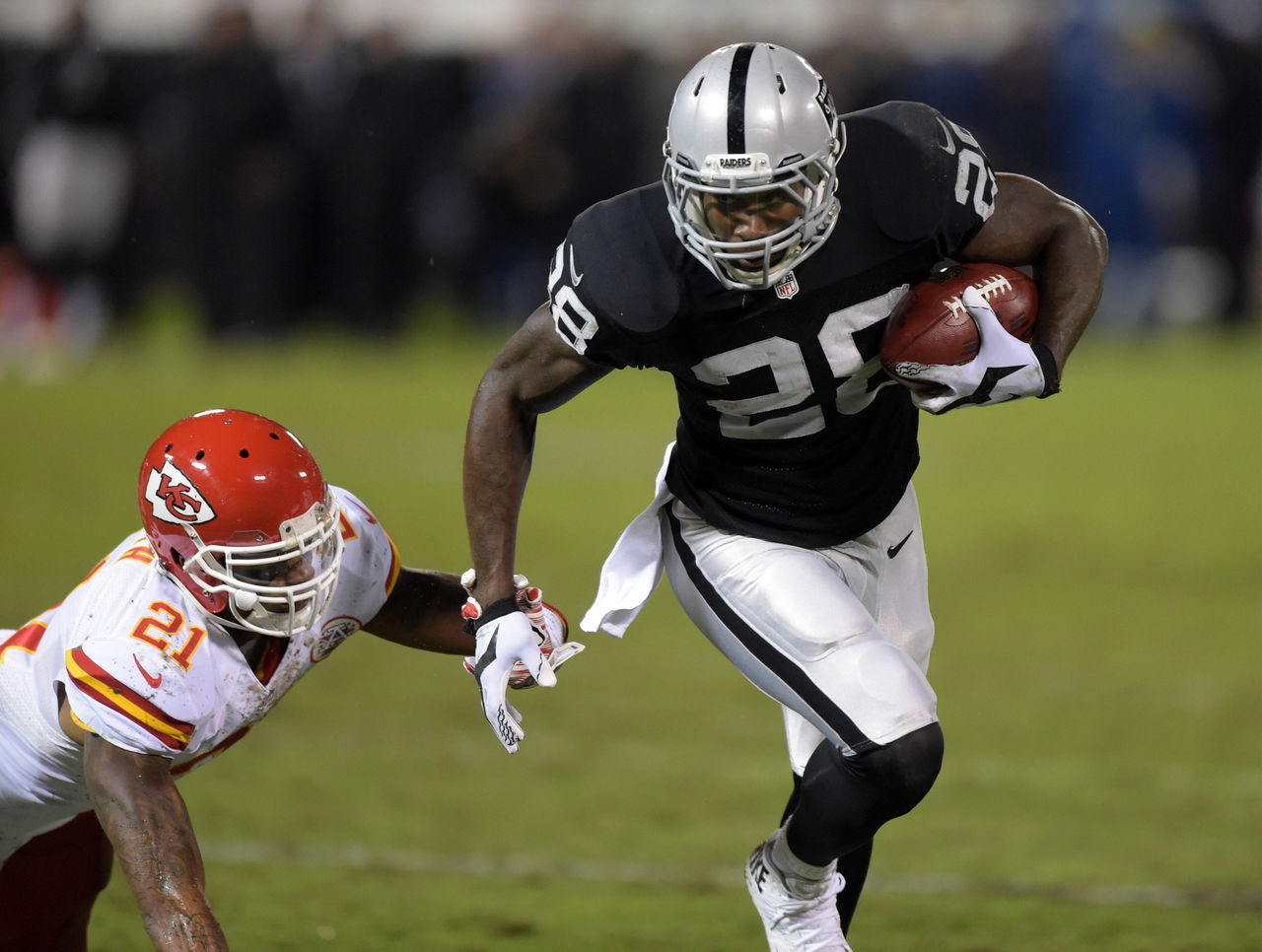
Oakland Raiders RB Latavius Murray debuted with a 112-yard, two touchdown day against the Kansas City Chiefs last season, before being forced from the game with a concussion after just four carries. Most of his fantasy points came on a single 90-yard touchdown run, but it's an example of a team trying to inject some life into their ground game after the duo of Darren McFadden and Maurice Jones-Drew disappointed all season.
Neither the matchup nor the Raiders' offensive line signaled promise for Murray, but the team's willingness to see what he was capable of sufficed.
The Davis and Murray situations present plenty of value to daily fantasy owners, as a backup or an unproven talent will be greatly underpriced when given a starter's workload.
Owners should pay top dollar for the safest of the big names, and otherwise look purely at workload, matchups and value, while fading the mid-tier running backs.