
Matt Williamson is a former scout for the Cleveland Browns and spent 10 years at ESPN as a scout and co-host of "The Football Today Podcast."
The NFL season is right around the corner, and this year's Hall of Fame inductions will rightfully kick off the campaign. The 2017 class is composed of Morton Anderson, Terrell Davis, Kenny Easley, Jerry Jones, Jason Taylor, LaDainian Tomlinson, and Kurt Warner. Over the next two weeks, we'll highlight the four best-known players - Warner, Tomlinson, Davis, and Taylor - beginning with the former quarterback.
Warner’s journey to the Hall of Fame was as unlikely as anyone's who has ever been enshrined. He came from nowhere to reach superstardom.
Even more impressive was that he enjoyed two separate stints of greatness - with the Rams during “The Greatest Show On Turf” years and later with Arizona - despite going through a significant career hiatus in the mid-2000s.
Warner played for St. Louis from 1998 until 2003, dominating the early years but then appearing in just nine games over the final two seasons. He then went to the Giants, playing 10 games there during Eli Manning’s rookie campaign.
In 2005, Warner joined the Cardinals and played just 16 games across his first two seasons. He found himself in a playing-time battle with Matt Leinhart, a young, highly touted quarterback from the 2006 draft class.
Warner outlasted the Leinhart threat and finally regained his status as a premier signal-caller during his final three NFL seasons.
His career arc, right from the get-go, was amazing. It took an injury to Trent Green for Warner to even get his first starting opportunity. We may never have heard of him otherwise.
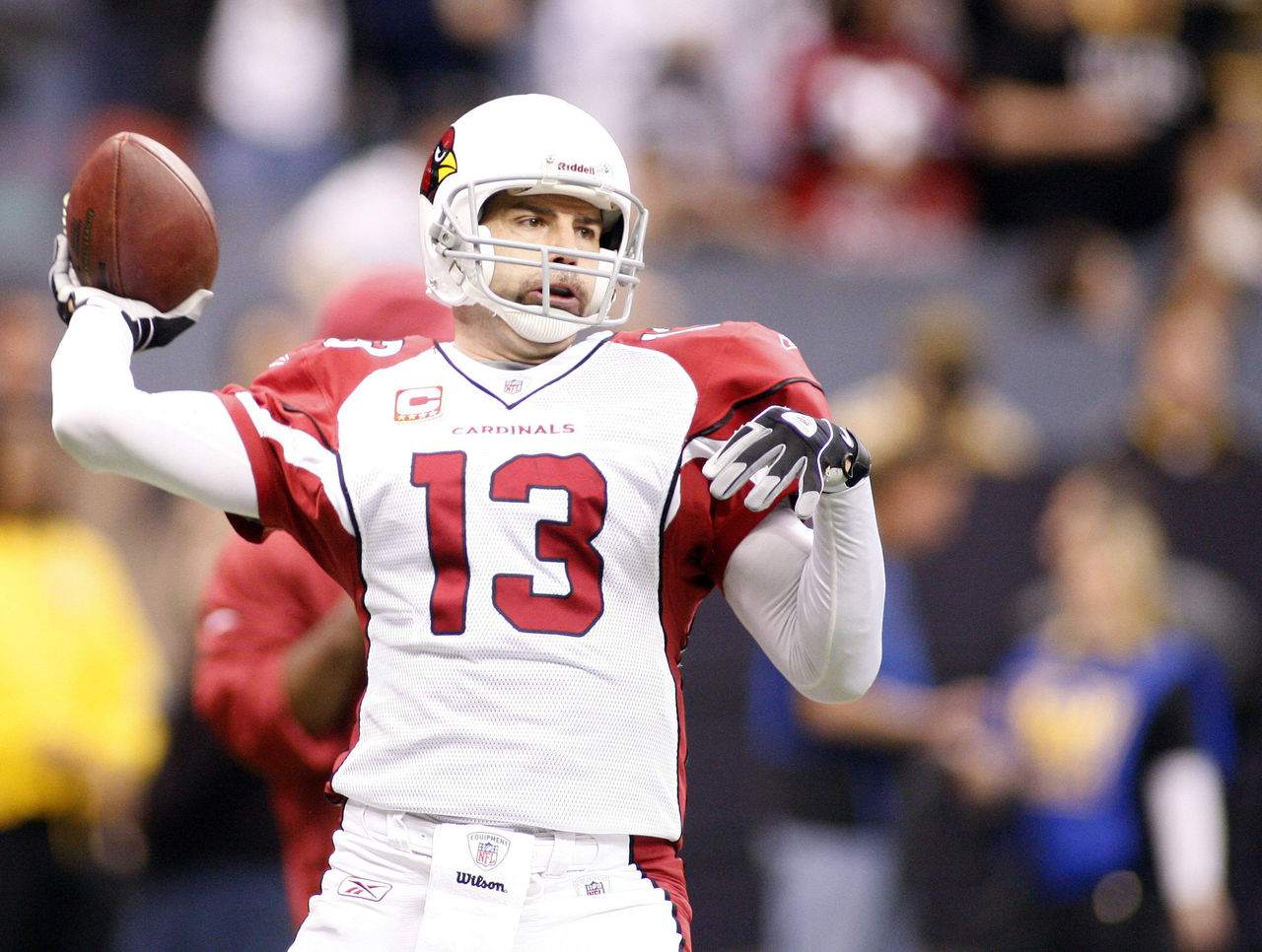
(Photo courtesy: Action Images)
What about Warner as a player? In St. Louis, he played under head coach Dick Vermeil, but the offense belonged to coordinator Mike Martz. Warner had a fantastic supporting cast around him. You know the names: Marshall Faulk, Orlando Pace, Torry Holt, and Isaac Bruce, just to name the other Hall of Fame-level talents on that legendary offense.
But it was Warner who made it all go.
Never an elite athlete, Warner navigated the pocket very well while always keeping his eyes downfield. In fact, over his career he often showed outstanding toughness and discipline by holding the ball until the last possible instant before firing a strike downfield and inevitably getting drilled by a fierce pass-rusher. Warner took a lot of big hits, which endeared him to his teammates and showed a great dedication to winning.
But it also made him a great fit with Martz, along with Ken Whisenhunt in Arizona. Both of those offensive minds stressed deep drops and deep shots downfield. And neither coach ever put a premium on protection. That suited Warner perfectly. He led the NFL in average gain per attempt three times, while Martz and Whisenhunt had the right quarterback for their systems.
Warner also had a strong arm and a very quick release. Especially with the Rams, he excelled firing the ball into tight windows in the middle of the field on deep digs and crossers. He completed countless passes that many quarterbacks wouldn't even attempt.
He had a great mind for the sport and processed information very quickly, and played some of his best games when it mattered most. In fact, Warner was the first quarterback in history to throw for 300 yards in a Super Bowl three different times, including a 414-yard effort in Super Bowl XXXIV in a winning effort over the Titans.
It was an incredible journey. Warner went from being undrafted and then cut by Green Bay, to bagging groceries, playing in the Arena League, and then moving to NFL Europe before latching on with the Rams, starring briefly in New York, and finally resurrecting his career in Arizona. And now, he'll be in Canton for eternity.


