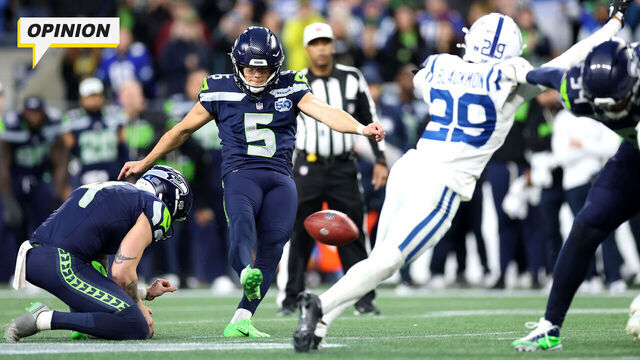
Late in the fourth quarter Sunday afternoon, the Seattle Seahawks kicked a field goal to take a two-point lead over the visiting Indianapolis Colts.
The clock showed 2:30 remaining - plenty of time to mount a game-winning drive.
Or, in the NFL of 2025, two game-winning drives.
A 27-yard kickoff return gave the Colts the ball at their 32-yard line. From there, they ran six offensive plays with grandpa Philip Rivers - only one of which, a 16-yard completion to Alec Pierce, moved the ball significantly downfield. But that and some short Jonathan Taylor runs got the ball just barely into the Seattle side of the field, from which Blake Grupe drilled a 60-yard field goal. There were 52 seconds remaining.
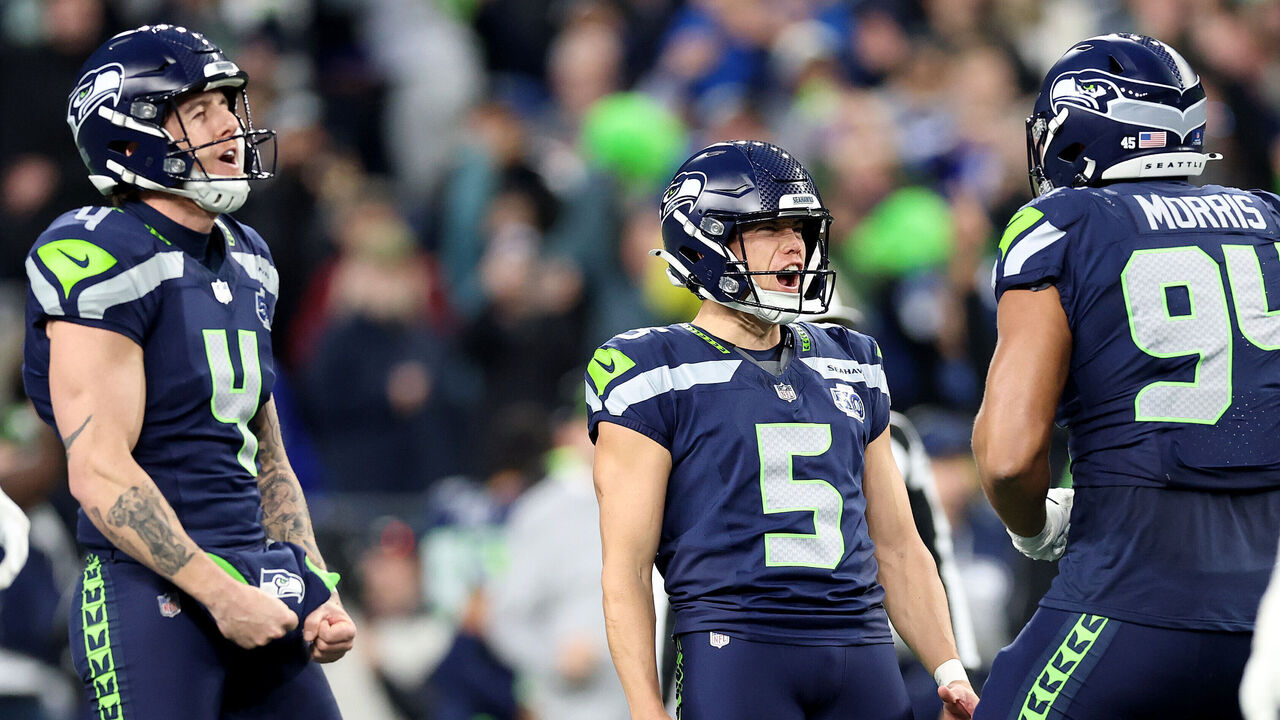
Seattle had been forced to burn all its timeouts, but that was of little consequence. A 28-yard kickoff return gave Sam Darnold the ball at the Seahawks' 37-yard line. He completed a 17-yard pass, spiked the ball, completed an 8-yard pass, and then threw an incompletion. That was a 25-yard drive that took all of 22 seconds. And it was enough for Jason Myers to kick a 56-yard field goal to give Seattle the win.
That closing sequence neatly encapsulated two rule changes that have fundamentally transformed late-game situations in the NFL this season. The new "dynamic" kickoff means that teams often start drives from the 35-yard line or somewhere around it after a return.
That change alone is already significant since it shortens the distance required to move the ball into field-goal range, but then there's the other change: giving teams more time to prepare special kicking balls and more balls to choose from.
K-balls, as they're called, used to be delivered to the stadium on game day, and teams had a 60-minute window to prepare three of them for use. This year, 60 balls were delivered to each team before the season, and a ball can be used in up to three games. Although treating K-balls with high heat isn't allowed, teams can condition them with water, towels, brushes, and sponges - plus, crucially, break them in during practice. That allows kickers who were already hitting more long-range attempts than ever to boot confidently from even further away. It's no coincidence that there have already been 10 successful kicks of at least 60 yards in 2025 - doubling the previous record of five set in 2022.
The extra wallop from the broken-in K-balls coupled with the dynamic kickoffs have created a situation where teams don't really need to mount "drives" in the traditional sense to score points. Each of the Colts and Seahawks scored late Sunday on drives featuring just one play that gained more than 10 yards.
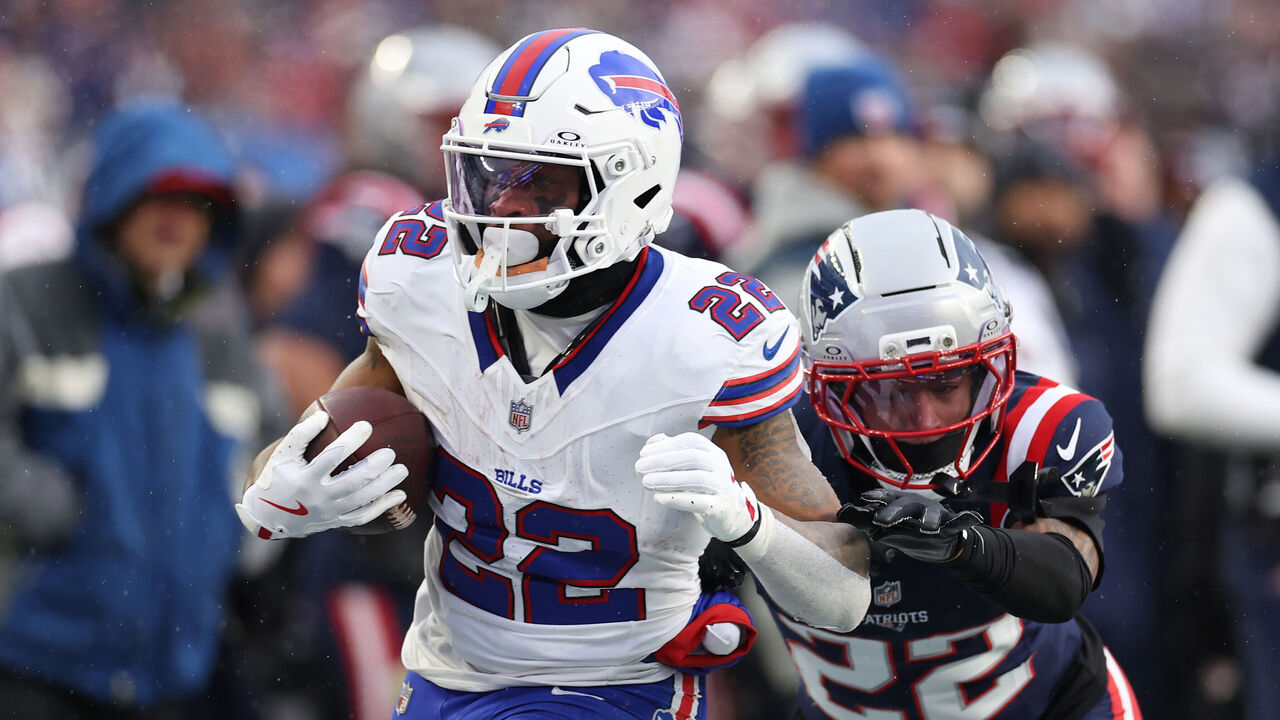
The new kickoff rules can also affect games even when field goals aren't involved. The Buffalo Bills found themselves down 21-0 in the first half at Gillette Stadium on Sunday in an uncomfortable throwback to the Tom Brady years. But Ray Davis had kickoff returns of 38 yards and 58 yards on either side of halftime, and on each drive, Josh Allen led the Bills to a quick-strike touchdown.
Davis ended the day with 164 yards on four kickoff returns, and late in the game, the Patriots just gave up trying to stop him: They kicked the ball through the end zone for a touchback. Allen and the Bills went on another scoring drive anyway, this time from the 35-yard line.
When the move to dynamic kickoffs was announced, the NFL said it was intended to "promote more returns" and create a play that "resembled a typical scrimmage play." That's fair enough: Touchbacks, which had become the standard on the majority of kickoffs, are pretty boring. But it's easy to wonder if the NFL realized just how much it was changing when it implemented the new rule. All of those short-field drives have increased scoring opportunities overall, but they've also depressed passing statistics and encouraged more long-distance field-goal attempts with those fresh-out-of-the-oven balls.
Is any of this a problem? No. None of the preceding is a complaint, and it's funny for football fans of a certain age to see a lost relic like kickoff returns suddenly back in vogue. If only someone would popularize the single-bar facemask again.
But it's still fascinating that the NFL implemented rule changes that had such profound effects when, let's be honest, it's not like business was suffering. And not all of the consequences may have been intended. If nothing else, the league's competition committee sure does like to meddle. (Looking at you, replay assist.)
The upcoming playoffs will be an interesting test. NFL postseason lore is full of hectic two-minute drills and heroic long drives. What if a big game is decided by duelling 63-yard kicks? Is that the kind of excitement - short pass, short pass, kick from the parking lot - that the NFL was trying to foster?
Scott Stinson is a contributing writer for theScore.