The fantasy football season has come to a close. Let's look back at some of the lessons we learned throughout the campaign and take a way-too-early look at the top of 2026 draft boards.
Money talks
"What have you done for me lately?" is a common phrase used by broadcasters to emphasize that NFL teams care more about recent performance over past achievements. Although a breakout game can sometimes be an outlier, plenty of players lower on the depth chart have delivered impressive performances, only to be overlooked for future opportunities.
I want to highlight two examples that illustrate the trend.
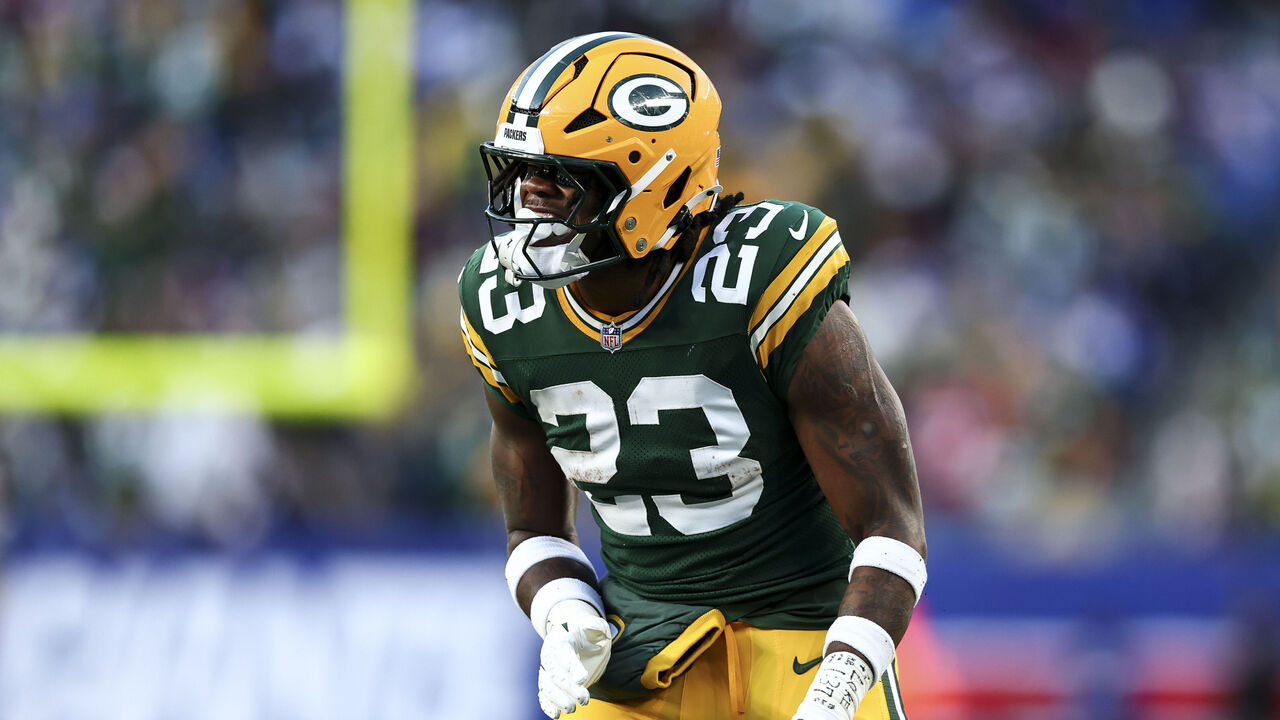
The first is Emanuel Wilson's role in Green Bay's offense compared to Josh Jacobs. Wilson's contract expires at the conclusion of the 2025 season, and he's earning just $1.03 million. Jacobs is under contract through 2027 after signing a four-year, $48-million deal prior to the 2024 campaign. Given Jacobs' superior talent and larger contract, he's expected to receive more work when healthy.
However, Jacobs hasn't recorded 100 rushing yards in a game this season. Wilson managed to reach that benchmark in Week 12 when Jacobs couldn't suit up, rushing for 107 yards and a pair of touchdowns on 28 carries. Despite the solid outing, Wilson recorded just nine carries across the next three weeks, playing 20% or fewer of the offensive snaps in those matchups.
The financials in the second example are far less dramatic but still demonstrate how contract value influences playing time in the NFL. Buccaneers running back Bucky Irving missed Weeks 5 through 12 with an injury, leaving Rachaad White and Sean Tucker as Tampa Bay's top runners. White, with a cap hit of $3.6 million, rushed for 306 yards and three touchdowns as the starter across those contests with Irving sidelined, averaging 3.8 yards per carry. Tucker, who carries a $1.03-million cap hit, nearly matched White with 275 yards and four rushing scores on 19 fewer carries, averaging 4.4 yards per carry. And although Tucker produced 140 scrimmage yards and three touchdowns in one of those matchups, the Syracuse product recorded just 12 carries the following week. He also hasn't played more than 50% of the Buccaneers' offensive snaps in a game this year, and he still earned fewer carries than White after Irving returned.
So what? It'll be worth monitoring to see whether similar breakout performances remain more isolated next season. FAB is a valuable resource, and we don't want to waste it if coaches continue to prioritize their starters (and those starters' salaries), regardless of their on-field effectiveness.
Week-to-week dominance hard to come by
Defensive adjustments, injuries, and other factors prevented many players from dominating the entire year. A look at some of the top scorers at each position illustrates the point.
Josh Allen recorded finishes of QB17, QB22, QB25, and QB27 in games this season, yet the reigning MVP is still far and away the top quarterback. Bo Nix, meanwhile, had only six finishes as QB12 or better but is the No. 5 signal-caller because of general inconsistency at the position.
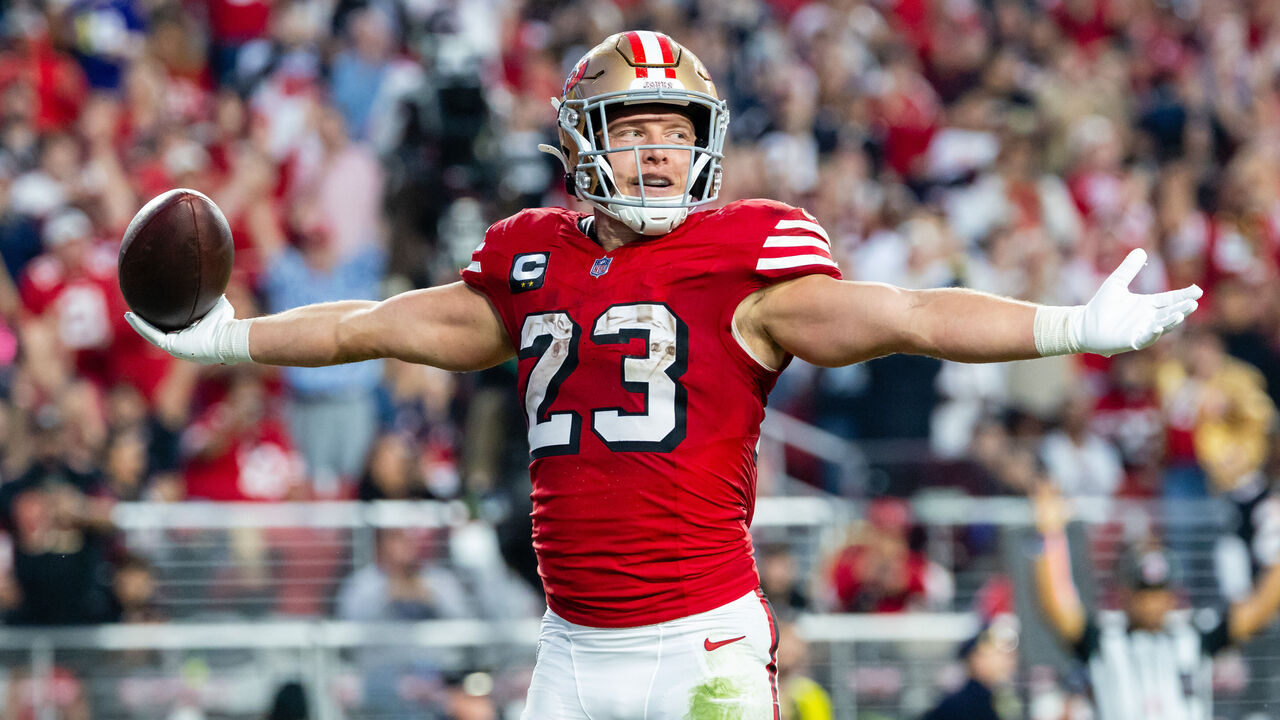
Christian McCaffrey is a bit of an outlier here. As the top running back in half-PPR scoring, he placed as RB12 or better in all but three games. Go down one spot, and you'll see Jonathan Taylor. The 26-year-old produced six games as RB3 or better and seven more as RB7 or better, but all of his other performances ranked as RB18 or worse.
Even the top wideouts had several disappointing weeks. Jaxon-Smith-Njigba finished as low as WR71 in one week and managed WR19 and WR25 results in two other contests. Similarly, Puka Nacua had four consecutive games as WR16 or worse.
Finally, we look at Trey McBride. Although injuries and lack of depth at tight end left McBride without a real challenger, he was still TE13 or worse in five outings.
So what? There will always be an element of chance when playing fantasy football. Even the best players can let us down, no matter how advantageous their matchups. Stick to your research and prioritize a good, logical process rather than overreacting to dips in production.
There's a tight end problem
Speaking of tight ends, McBride had 224.3 half-PPR points entering Week 17. The next closest at the position was Kyle Pitts at 155.4, with the 25-year-old scoring 40.1 of those points in Week 15. McBride outpaced Pitts by 68.9 points. To find another tight end that far behind, you'd need to go all the way down to Sam LaPorta, who managed his TE22 result despite being placed on injured reserve after playing just nine games.
Virtually the whole tight end leaderboard is strange. Travis Kelce entered Week 17 compiling seven performances with single-digit fantasy points but ranks third overall. Rookie Tyler Warren sits at eighth despite not finishing with double-digit points since Week 10, while AJ Barner holds the TE13 spot even though he's finished TE21 or worse eight times, including as low as TE57.
So what? I've long championed targeting one of the top two to three tight ends during fantasy drafts, assuming the price is reasonable. While this strategy isn't groundbreaking, and neither is a backup plan of waiting until much later to fill the position if you miss out on the top options, this year's results reinforce how reliable this approach can be.
McBride and Brock Bowers are the only tight ends I'll be willing to draft even remotely early next year. McBride has dominated, and Bowers still ranked TE6 entering Week 17 despite being limited to eight games due to injury. There may be an argument for LaPorta or Tucker Kraft if their ADP falls closer to the middle rounds, but I'll still be hesitant.
Way-too-early top 30
We're already preparing for the 2026 fantasy season.
Robinson could see an uptick in goal-line carries if Tyler Allgeier leaves in free agency.
McCaffrey's biggest hurdle will be health, as it's always been.
St. Brown should continue to provide immense upside in half-PPR/PPR leagues for years to come.
The Packers have shown they're willing to give Jacobs plenty of work, even as his efficiency starts to dip. Monitoring any notable additions at running back for Green Bay will be important.
Having Jefferson all the way down at No. 20 feels almost criminal, but the Vikings need to prove they can field a consistently effective offense in 2026.
Egbuka has cooled off a bit in recent weeks, but Mike Evans could retire when his contract expires at the end of the season. Even if Evans returns, the Bucs should expand Egbuka's role.
Judkins should be ready for the 2026 season after undergoing surgery to repair a dislocated ankle and fractured fibula.
Veterans like Derrick Henry and Davante Adams could make their way into the top 30 once the 2026 NFL picture is clearer.
Andrew Dixon is a contributing fantasy analyst for theScore.