
Combining his own perspective with what he's been hearing from those in and around the game, senior NHL writer John Matisz breaks down the hot topics across the hockey landscape.
Leafs spiraling toward big change
The Maple Leafs are spiraling.
It's a familiar state for the Original Six franchise in the Auston Matthews era. However, the annual spiral tends to occur in April or May, not mid-December.
Toronto owns the NHL's longest active playoff streak, but the nine-year run is on life support thanks to a 15-13-5 record. There are few, if any, silver linings to this sideways season, as the Leafs sit 14th in the Eastern Conference through 33 games. They're bottom five in nearly every offensive and defensive category; passion and urgency levels have been laughable at times; the power play's a disaster; and, unlike in 2024-25, elite goaltending isn't saving the day.
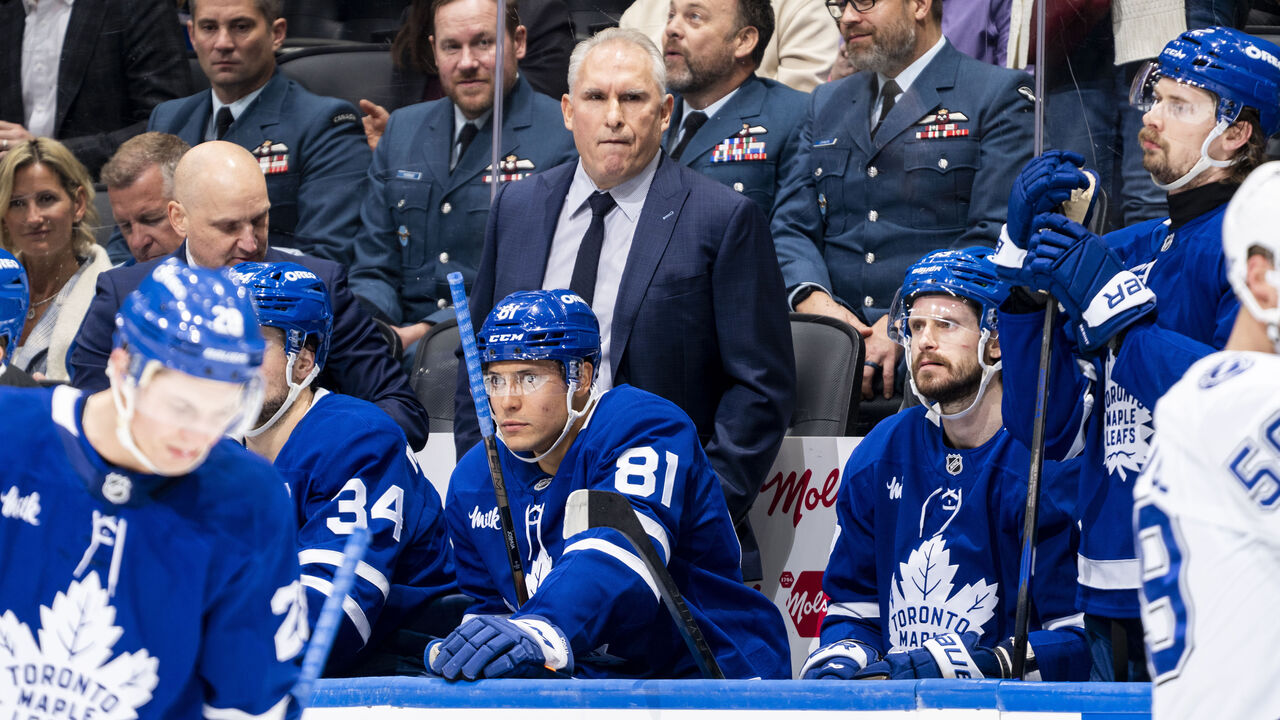
It's abundantly clear the Leafs are a poorly built team filled with players who aren't suited for Craig Berube's preferred style of play. Berube recently called out his best players (and the team at large), which hints he's either lost the dressing room or is losing his mind trying to fix the on-ice product. (Or both.)
The most troubling development from a long-term perspective: Matthews, the player the franchise revolves around, is on pace for 63 points in 77 games. The captain hasn't been a consistently dominant force since 2023-24.
The Leafs, losers of four of their past six games, are in Nashville on Saturday night, Dallas on Sunday, and then host the Penguins on Tuesday to wrap up the pre-holidays schedule. It's December and the Preds own the worst points percentage in the NHL, yet Saturday's result looms large. The stakes are high.
General manager Brad Treliving gave Berube a public vote of confidence in November. If the spiral continues, even just for another game or two, the GM may feel he has no choice but to fire the coach. Berube isn't the only one responsible for the Leafs' dreadful year. But he's the easiest to move on from.
First impressions of Minny Hughes
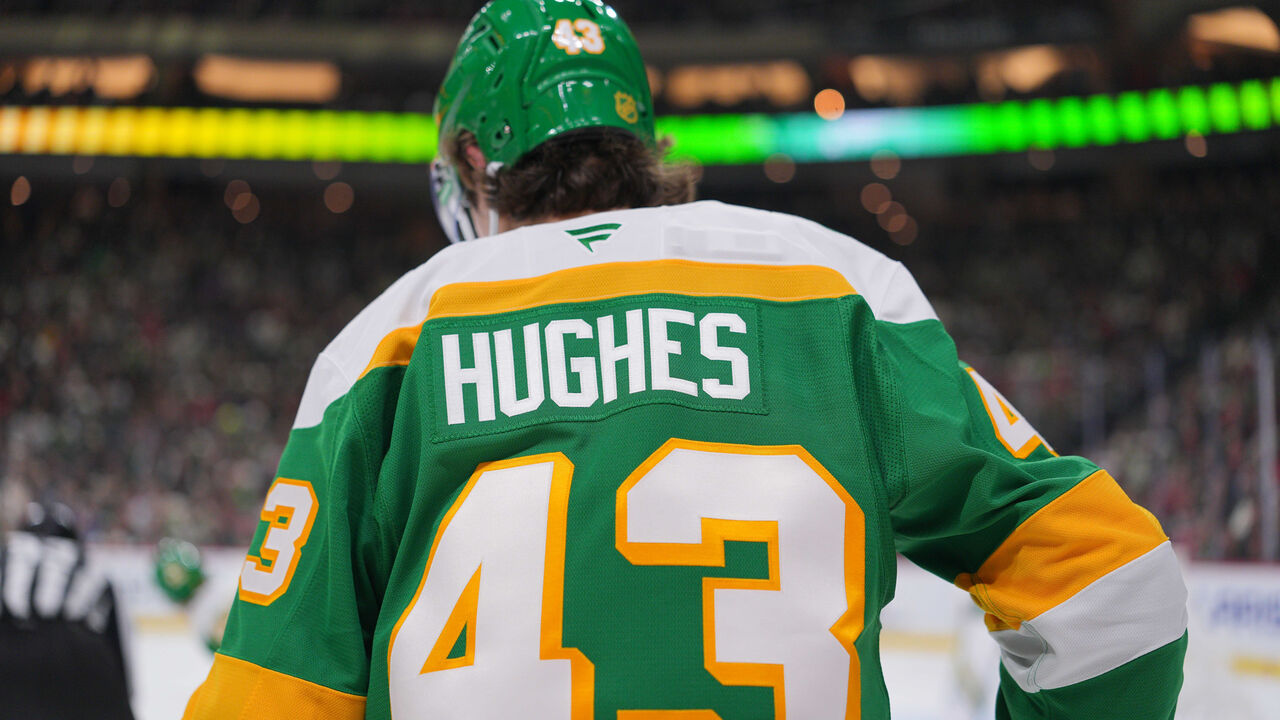
The stunning Wild-Canucks blockbuster is a week old.
Here are three notes following Quinn Hughes' first three Wild games:
1. Looking both weird and sharp in a green No. 43 jersey, Hughes has been up to his usual tricks, manipulating defenses and dictating the flow of play. He's recorded one goal, one assist, and six shots on goal. Minnesota's outscored the opposition 5-4 in his five-on-five minutes. Still, it's obvious the star player is adjusting to a new team and the team's adjusting to a new star.
2. Hughes' usage has been insane thus far: 26:55 in a 6-2 home win over Boston, 29:33 in a 5-0 home win over Washington, and 32:02 in a road win over Columbus. Keep in mind none of these totals include overtime action.
3. Hughes immediately assumed the power play quarterback role and has been paired almost exclusively with Brock Faber at even strength. (The American duo might share the ice at the Olympics.) Wild coach John Hynes will surely experiment with different pairs once Jonas Brodin and Jake Middleton return from injuries. Toss in Jared Spurgeon and David Jiricek, and Minny has the most talented and deep one-to-six blue line in the entire NHL.
Bruins' retool slowly taking shape
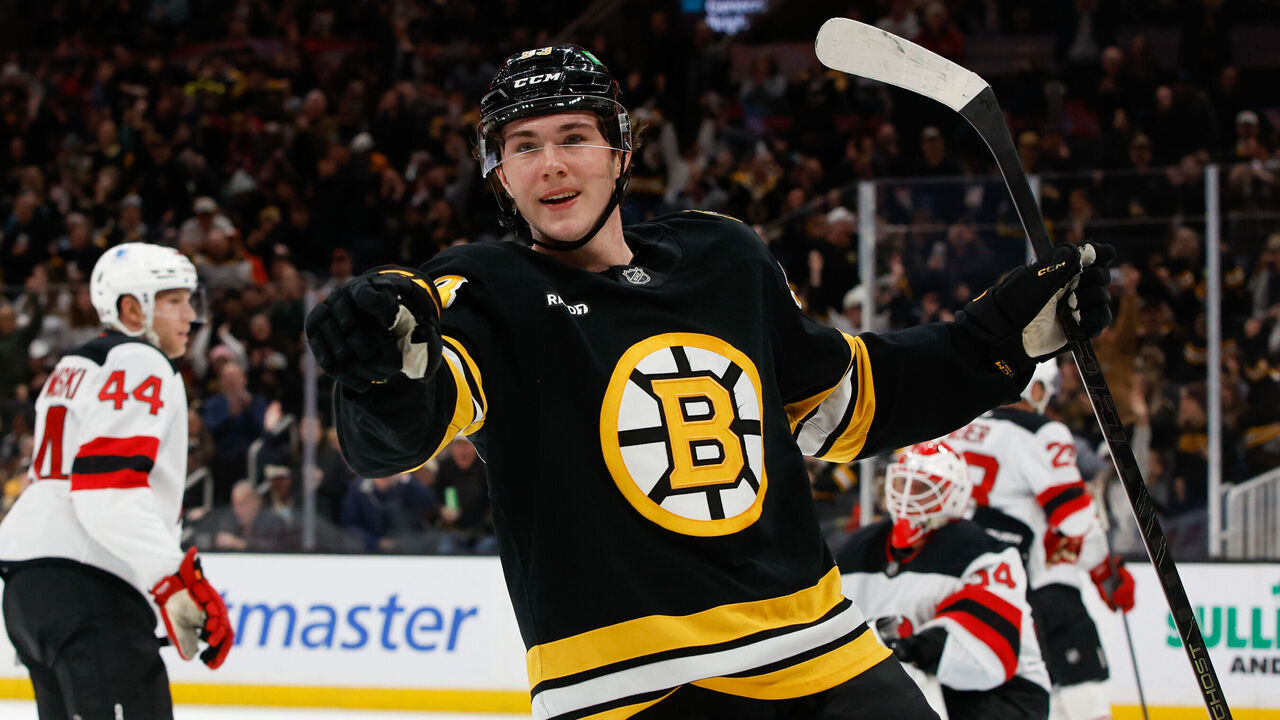
Bruins GM Don Sweeney wasn't the most popular man in Boston to start 2025, having shipped out a handful of fan favorites - most notably franchise icon Brad Marchand - to kickstart a retool ahead of March's trade deadline.
Sweeney's approval rating is in much better shape to close out 2025.
Former Bruins Brandon Carlo and Trent Frederic haven't performed well in Toronto and Edmonton, while Charlie Coyle and Justin Brazeau are no longer playing for the teams Sweeney traded them to. Marchand is the lone flipped player who's found success (a Stanley Cup and hefty extension in Florida).
From the various return packages, Boston appears to have unearthed three long-term pieces up front in centers Casey Mittelstadt and Fraser Minten and winger Marat Khusnutdinov. A few prospects and draft picks are still to come.
The hiring of Marco Sturm is another 2025 victory. I'm told the organization is super happy with the first-time head coach's fit as both an on-ice tactician and off-ice communicator. The players feed off Sturm's energy and intensity.
Top of 2026 draft class 'messy'
NHL teams typically hold midseason amateur scouting meetings around this time, either shortly before or after the holidays and world juniors tournament.
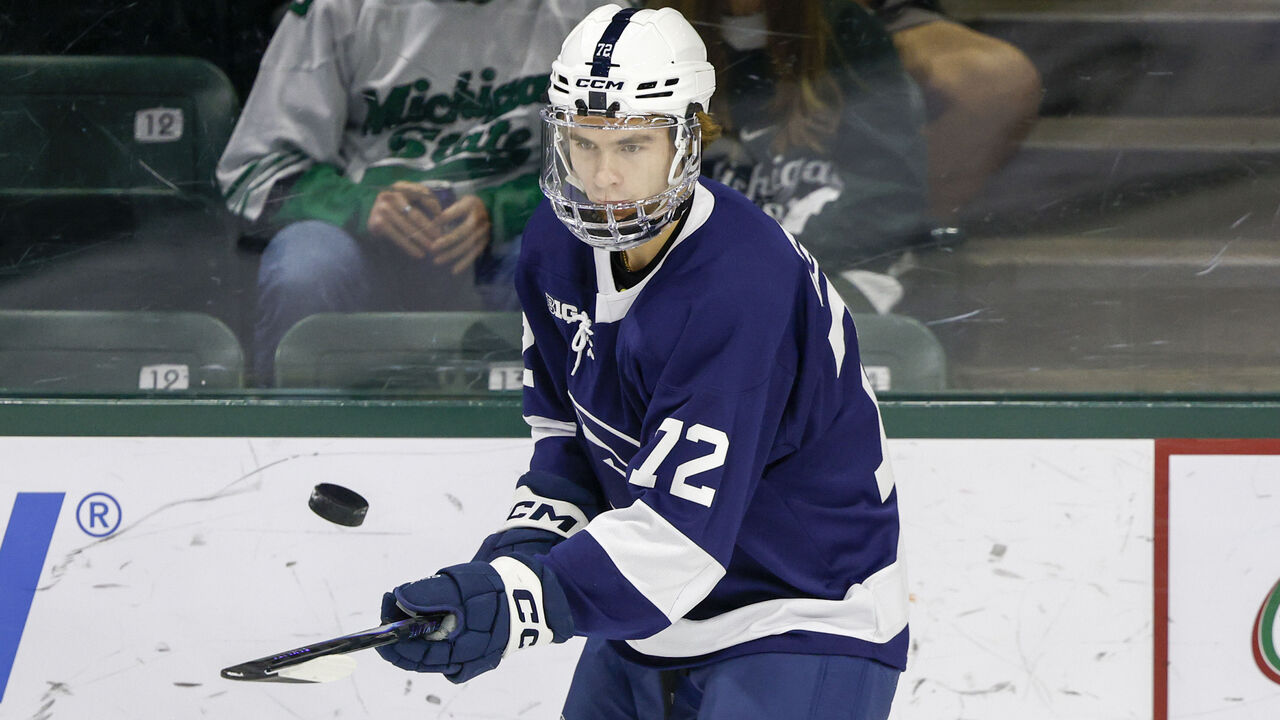
One staffer for an Eastern Conference club used the word "messy" this week to describe the very top of the 2026 draft class. Presumptive No. 1 pick Gavin McKenna - a dazzling winger for Penn State who'll assume a prominent role on Team Canada starting next Friday - isn't tearing up the NCAA as expected. Meanwhile, North Dakota defenseman Keaton Verhoeff, Frolunda winger Ivar Stenberg, and Muskegon center Tynan Lawrence have all improved their draft stock enough to warrant consideration for the first overall selection in June.
As of now, the staffer doesn't see a franchise-altering talent in the class - nobody quite at the level of Matthew Schaefer (2025), Macklin Celebrini (2024), or Connor Bedard (2023). However, the first round is "pretty deep" in the staffer's eyes. There are 15-20 players worth getting "damn excited" about.
Flyers missing dynamite young center
Reader Nathan M. recently sent over a big-picture question about the Flyers.
As a Flyers fan, I'd love your take on the direction and current state of the team. Are they in the Montreal/Ottawa category?
The Flyers own the seventh-best points percentage in the NHL. The Rick Tocchet-led coaching staff and key players, especially offseason acquisitions Trevor Zegras and Dan Vladar, deserve major props for a 17-10-6 record.
If we're talking long-term outlooks, though, I don't see Philadelphia as a direct peer to Montreal and Ottawa. Philly's in strange territory. Its NHL roster and prospect pipeline are filled with good players, yet arguably zero great ones.

The 25-and-over group, led by Travis Konecny, Sean Couturier, Owen Tippett, and Travis Sanheim, is nothing special in the grand scheme of a 32-team league. The under-25 group - mainly Matvei Michkov, Trevor Zegras, Jamie Drysdale, and prospects Porter Martone and Jack Nesbitt - doesn't project to be the nucleus of a future Stanley Cup contender like the core in Montreal. In Ottawa, Brady Tkachuk, Tim Stutzle, and Jake Sanderson form a Big Three.
All of that said, GM Daniel Briere does have runway to eventually trade for a needle-moving skater. I'd feel better about the Flyers' direction if Michkov and Martone were accompanied by a current or future dynamite first-line center.
Depth issues sinking Jets' season
Winnipeg is a torturous team at the moment.
After a 9-3-0 start the season, the reigning Presidents' Trophy winner has sagged to a blah 15-17-2 record and is tied for sixth in a top-heavy Central Division. The middle of the slide coincided with Connor Hellebuyck suffering a knee injury. (The stud goalie missed 12 games from Nov. 15 to Dec. 13.)
Most disheartening to Jets fans is the absence of secondary scoring.
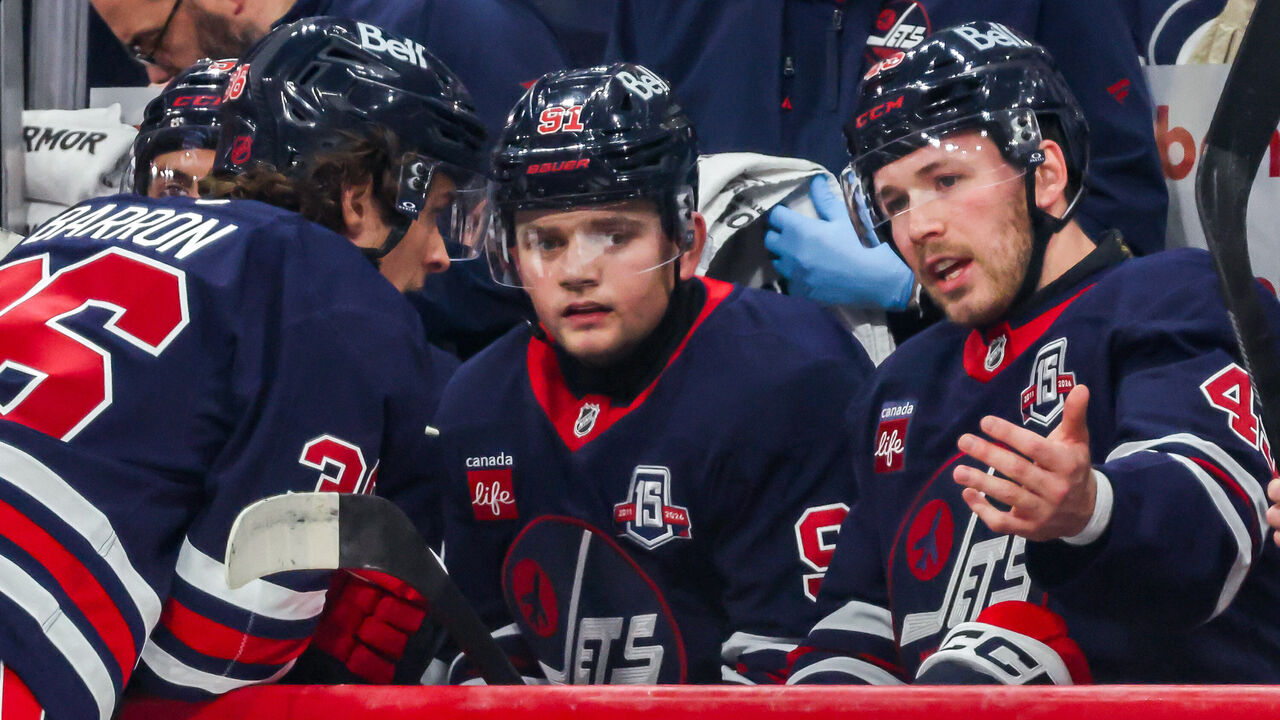
Mark Scheifele, Kyle Connor, Gabriel Vilardi, and Josh Morrissey - Winnipeg's three first-line forwards and No. 1 defenseman - have combined for 53 goals, or a whopping 53% of the club's total offensive output. The rest of the roster, from crafty playmaker Cole Perfetti to two-way captain Adam Lowry to offseason pickup Jonathan Toews to mobile defenseman Neal Pionk to lesser-known pieces, has pitched in just 47 goals through 40% of the season.
For context, Colorado's explosive four-pack of Nathan MacKinnon, Marty Necas, Artturi Lehkonen, and Cale Makar accounts for 49% of its total goals.
How would 3-2-1-0 standings look?
In response to an item in the last edition of NHL Inbox, reader Trav S. is wondering how much the standings would change if the NHL adopted the 3-2-1-0 points system. (That's three points for a regulation win, two for an overtime/shootout win, one for an OT/SO loss, and zero for a regulation loss.)
Drum roll, please ... actually, never mind.
The playoff picture would be surprisingly similar.
Thirteen of 16 of the teams in a playoff spot as of Saturday morning would also make the postseason in the 3-2-1-0 system popularized by the PWHL.
The Western Conference divisional seeds would go completely unchanged, while the wild cards would switch from Los Angeles/San Jose to Utah/L.A.
In the East, the Metropolitan seeds would also go unchanged. But, in the Atlantic, Tampa Bay would replace Montreal, and Florida and Detroit would switch spots. The Islanders would drop from the first wild card position to second, and Boston would come in for Philadelphia to complete the bracket.
What do you want to know, hockey fans?
There are three ways to submit a question for future NHL Inbox editions.
- Comment on this article in theScore app
- Email John at [email protected]
- Send John a message on X (@matiszjohn)


