How Brazil's elimination is being misinterpreted
Toward the end of Brazil's 7-1 semifinal loss against Germany, an image of a Brazilian flag being burned in downtown Sao Paulo started making the rounds.
The photo inevitably led to widespread remarks of how a football-mad nation like Brazil doesn't know how to gracefully accept defeat, with the flag burners in question being referred to as "not real fans," "idiots," and "classless" among more vulgar things.
It was an expected reaction to the image, but it completely missed the point and compromised the very complicated issue of Brazil hosting the World Cup.
While there are those who want to believe that Brazilians will be spending their Tuesday night rioting and setting the country's streets ablaze because of a 7-1 loss against an international rival, that simply isn't the case. The flag burning — an isolated incident — isn't a reaction to Brazil's elimination. Rather, it's the result of a people angered by having to pick up the tab of a tournament they had no choice but to host.
Throughout Brazil's World Cup campaign, there was always a sense that the team's elimination would spark a drastic change in the Brazilian public's attitude towards hosting the tournament. The "anti-Copa" movement has been strong ever since it was first announced that Brazil would host the tournament, but the majority of the country's population have been rooting for the Seleção to claim its sixth World Cup title, choosing to turn a blind eye to the figurative and literal costs of the tournament.
Many people have wondered why the World Cup hasn't seen the widespread protesting that consumed the 2013 Confederations Cup one year ago, and while pinpointing an exact reason is tough, there seems to be a general consensus that it has to do with the country's upcoming general election.
Brazilian president Dilma Rousseff, who is up for re-election in October, has supported the World Cup religiously and built something of a political platform around the tournament. It's not exactly a stance you'd expect from a former Marxist guerrilla who was involved in Brazil's 1964 coup d’état, and it's no wonder that the public has accused her of selling out and acting as one of FIFA's puppets.
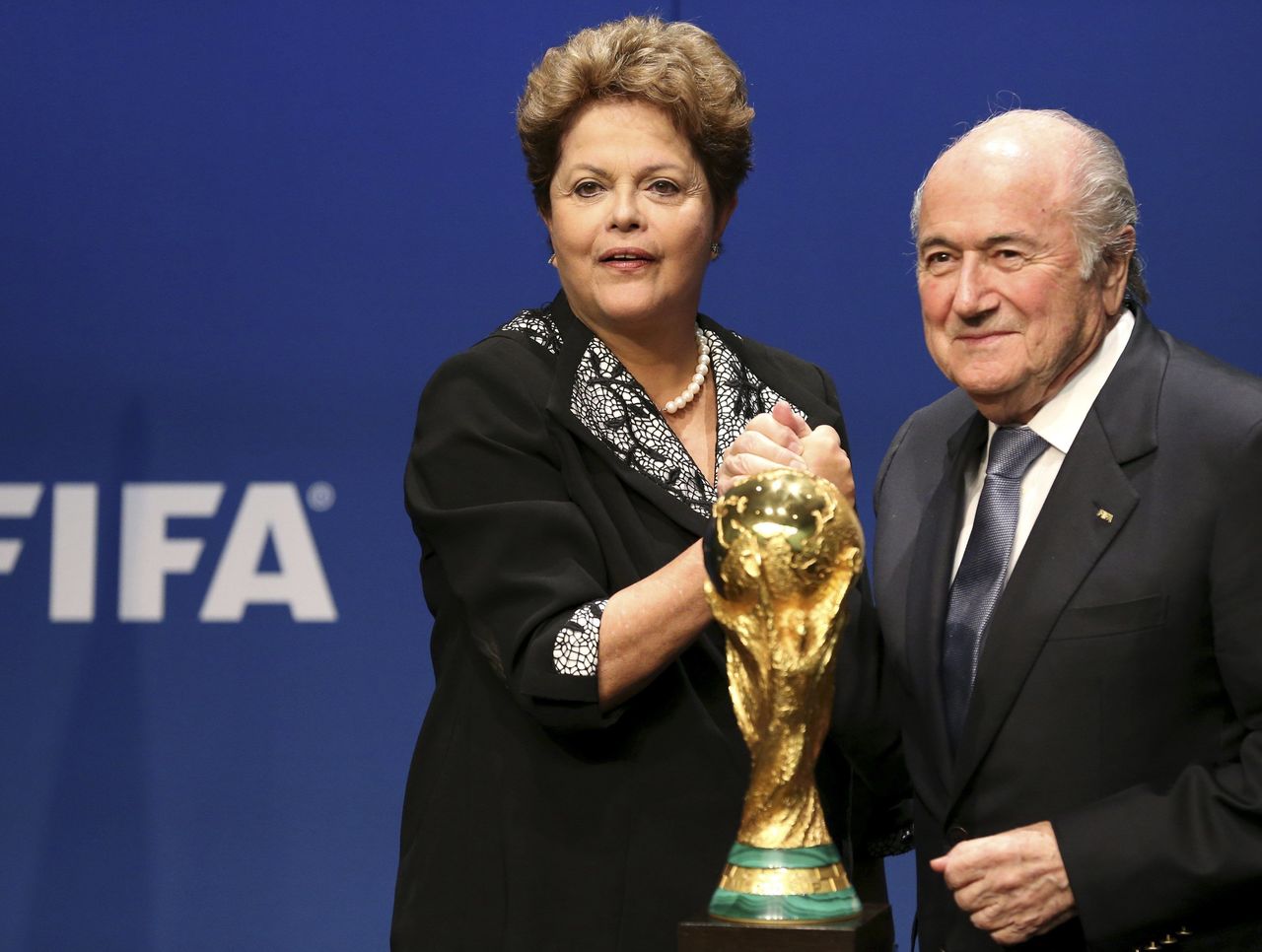
Those who believe Dilma has harmed Brazil's progress are surely delighted at the team's elimination. Had the Seleção gone on to win the whole thing, her chances of re-election would undoubtedly have been boosted by the ability to tie her face to the joy of winning the World Cup. Instead, vulgar chants could be heard in the 40th minute of the 7-1 loss directed at the Brazilian leader.
Attributing flag burning — or any post-match incidents — to Brazil's elimination does Dilma a favor. It paints a picture of a country that's fanatic about football while completely ignoring how badly the public is craving social improvements. Believe it or not, but most Brazilians are more concerned with earning a living wage than winning the World Cup.
In the moments following Brazil's elimination, reports surfaced that an arrastão, a form of crime in which gangs surround a location in order to commit mass robbery, had taken place at Rio de Janeiro's FIFA Fan Fest on Copacabana, forcing people to flee in panic.
It was later reported that the wild scenes were actually the result of a fight that broke out, but of course, the incident was treated by many as a reaction to Brazil's 7-1 loss.
After all, it's easier to simplify the situation than discuss why so many Brazilians are forced to turn to a life of crime in the first place. Just like it's easier to assume outrage is based on obsession for football rather than a demand for social progress.
HEADLINES
- Spurs' Kudus suffers injury setback as Ghana's World Cup draws nearer
- FIFA adds new even more expensive World Cup ticket categories
- FIFA selects record 52 referees for World Cup, including 2 women
- England to play World Cup warm-ups in Florida vs. New Zealand, Costa Rica
- 'Time for business': Davies excited to lead Canada at home World Cup